The Great Canadian Pendulum: Living Through the Four Seasons in Rural Canada
Living in rural Canada isn’t just a change of scenery; it’s a total lifestyle recalibration every three months. Out here, the landscape doesn’t just “change”—it transforms. You aren’t just observing the weather; you are negotiating with it.
From the silent, frozen depths of January to the humid, buzzing heat of July, here is what it’s actually like to live through the extreme swings of the Canadian wild.
Winter: The Deep Freeze
In rural Canada, winter is the protagonist. It’s not uncommon to see temperatures plummet to -30°C, and with the wind chill, it can feel like -45°C. At these temperatures, exposed skin can freeze in minutes, and the air feels “sharp” when you breathe.
- The Reality: Life slows down, but the workload goes up. You become a part-time snow shoveler and a full-time meteorologist.
- The Setbacks: * Mechanical Failure: Cars often refuse to start without a block heater.
- Infrastructure Stress: Frozen pipes are a constant threat. If your power goes out during a storm, you’re looking at a survival situation rather than an inconvenience.
- Isolation: Heavy “lake-effect” snow or blizzards can wall you in for days before a plow reaches your backroad.
Spring: The “Mud” Season
Spring in the countryside is less about blooming flowers and more about the great thaw. As the snow melts, the frozen ground underneath remains solid, creating a layer of impenetrable ice topped with several inches of thick, grey mud.
- The Reality: Everything is brown, wet, and messy. You learn the true value of a high-quality pair of “muck boots.”
- The Setbacks:
- The “Mud-Out”: Unpaved rural roads can become literal quagmires, swallowing tires whole.
- Flooding: Rapid melts can turn small creeks into raging rivers, potentially washing out driveways or flooding basements.
Summer: The High Heat and the Humidex
People often forget that Canada gets hot. In the rural interior, summer temperatures can soar to 35°C. When you factor in the humidity (the “Humidex”), it can feel like a stifling 42°C.
- The Reality: The silence of winter is replaced by the roar of cicadas and the constant hum of mosquitoes and blackflies—the unofficial “national birds” of rural Canada.
- The Setbacks:
- Drought & Fire: Dry spells turn the lush bush into tinder. Fire bans become a way of life, and the threat of wildfires is a growing seasonal anxiety.
- Heat Exhaustion: Working outdoors (farming, gardening, or repairs) becomes dangerous during peak sun hours.
Autumn: The Golden Breath
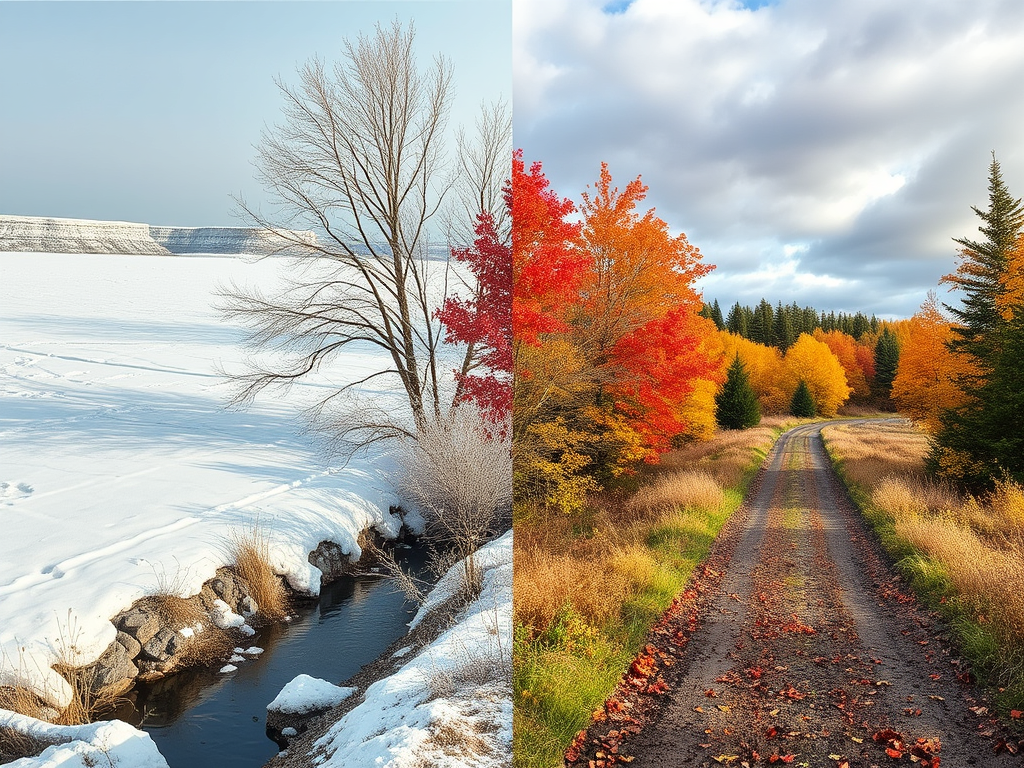
This is the “payoff” season. For a few glorious weeks, the humidity breaks, the bugs die off, and the maple trees turn shades of crimson and gold that look like a painting.
- The Reality: It’s a race against time. The crisp 10°C mornings are a reminder that the “Deep Freeze” is coming back.
- The Setbacks:
- Early Frost: A sudden cold snap can kill off a garden overnight before the harvest is finished.
- Wildlife Activity: Animals are on the move, fattening up for winter. This means a significant increase in deer and moose encounters on dark, winding rural roads.
The Verdict
Living in rural Canada requires a certain kind of “rugged flexibility.” You have to be comfortable with a 70-degree temperature swing over the course of a year. It’s a life of high stakes and high rewards—the setbacks are real, but the front-row seat to nature’s most dramatic performances makes every frozen pipe and muddy boot worth it.
Pro Tip: Always keep a “winter kit” in your car (blankets, candles, shovel) by October. In the rural reaches, “better safe than sorry” isn’t a cliché—it’s a survival strategy.
 Canadian Country Life
Leave a comment