
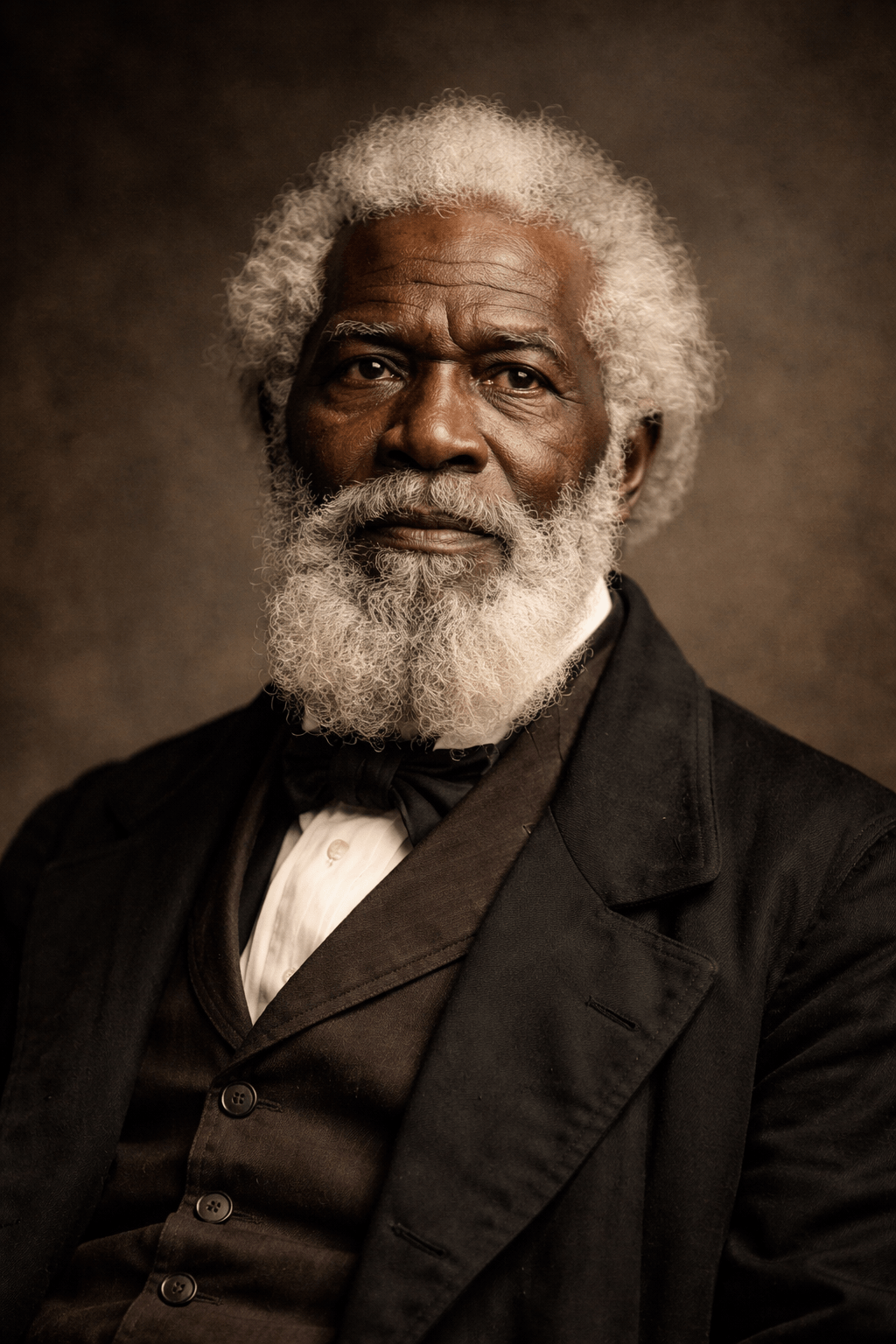
The Man Behind the Myth: Josiah Henson and the Real “Uncle Tom”
When people hear the name “Uncle Tom,” they often think of a fictional character or, more unfortunately, a derogatory term. But behind the pages of Harriet Beecher Stowe’s world-changing novel, Uncle Tom’s Cabin, lies the incredible true story of Josiah Henson—a man whose life was defined by iron will, spiritual depth, and a harrowing escape to freedom.
If you’ve ever wondered how much of the novel was “made up,” the answer is: less than you’d think.
Who Was Josiah Henson?
Born into slavery in Maryland in 1789, Josiah Henson’s early life was a gauntlet of brutality. He witnessed his family being sold off and suffered a permanent injury when a white overseer broke both of his arms and shoulder blades—a trauma that left him unable to lift his hands to his head for the rest of his life.
Despite this, Henson became a supervisor on a plantation and a preacher. He was known for his unwavering integrity, once even escorting eighteen enslaved people through free territory to a new plantation in Kentucky because he had given his “word” to his master. It was this specific trait—his initial, agonizingly strict adherence to a moral code even under the yoke of slavery—that inspired the character of Uncle Tom.
The Great Escape
The turning point came when Henson realized his master intended to sell him away from his family. In 1830, he chose a different path. Henson fled with his wife and four children, carrying the youngest on his back for over 600 miles.
They eventually crossed the Niagara River into Upper Canada (now Ontario). There, Henson didn’t just survive; he thrived. He became:
- A leader of the Dawn Settlement, a community for formerly enslaved people.
- A founder of the British American Institute, a school focused on vocational training.
- A conductor on the Underground Railroad, personally leading 118 people to freedom.
The Connection to Harriet Beecher Stowe
In 1849, Henson published his autobiography, The Life of Josiah Henson, Formerly a Slave, Now an Inhabitant of Canada.
When Harriet Beecher Stowe published Uncle Tom’s Cabin in 1852, it became a global sensation. To defend herself against critics who claimed her depiction of slavery was exaggerated, she published A Key to Uncle Tom’s Cabin, explicitly citing Henson’s memoirs as a primary source for her protagonist’s character and experiences.
“A benevolent and Christian man… he is the original of the character of Uncle Tom.” — Harriet Beecher Stowe on Josiah Henson
Reclaiming the Name
Over time, the term “Uncle Tom” was distorted by 20th-century minstrel shows, transforming a character of immense strength and Christian martyrdom into a submissive caricature.
By looking at Josiah Henson’s real life, we see the opposite of submissiveness. We see a man who:
- Successfully sued for his freedom (though he was cheated out of it).
- Built a self-sustaining colony in a foreign land.
- Met with Queen Victoria and became a celebrated international speaker.
Why It Matters Today
The Josiah Henson Museum of African-Canadian History in Dresden, Ontario, stands on the site of the Dawn Settlement. It serves as a reminder that while fiction can move hearts, history provides the blueprint for courage. Henson wasn’t just a character in a book; he was a pioneer who proved that the quest for dignity is more powerful than the chains of oppression.
 Canadian Country Life
Leave a comment