
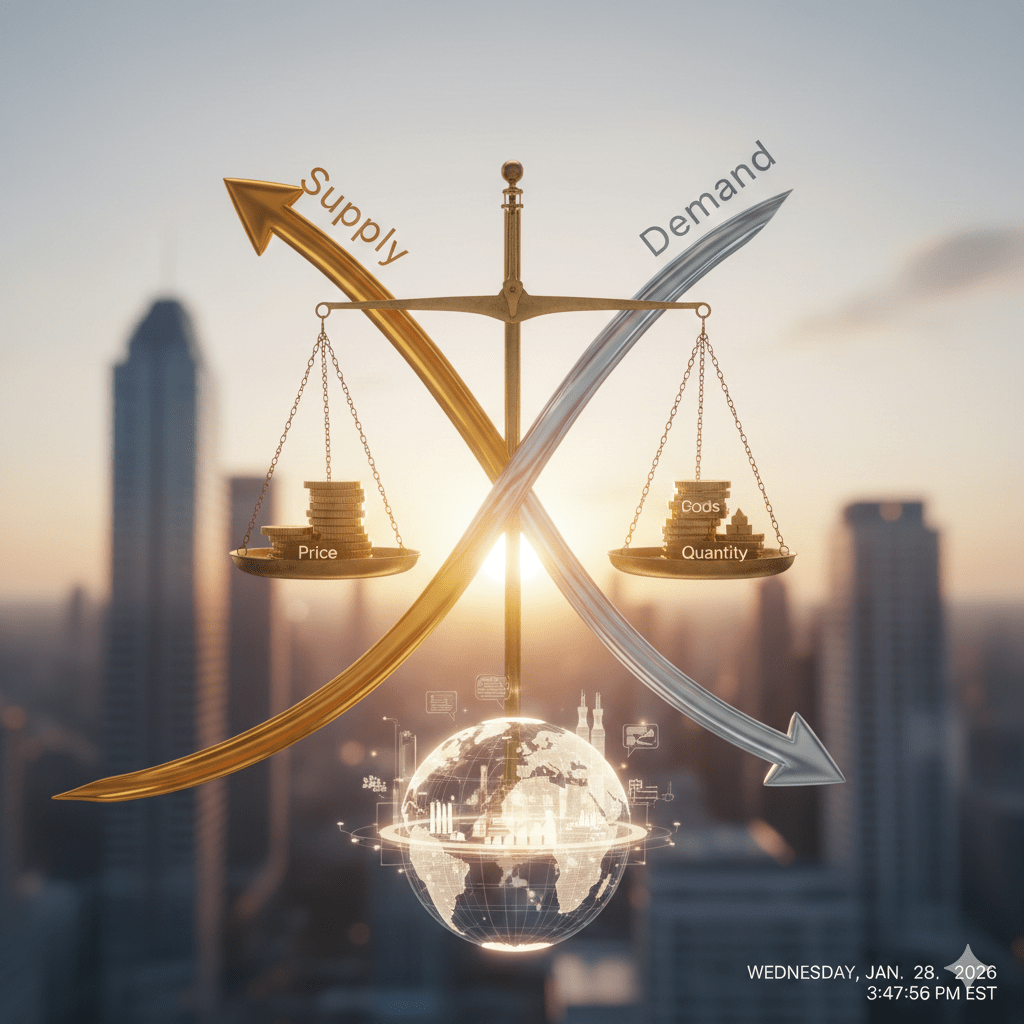
The Goal of a Perfect Economy
The dream of a “perfect” economy often feels like a zero-sum game. If the manufacturers win, the retailers feel squeezed; if the customers get low prices, the supply chain feels the burn. But what if we stopped looking at the economy as a tug-of-war and started viewing it as a circular ecosystem?
To reboot GDP and keep every stakeholder—from the raw material importer to the person at the checkout counter—smiling, we need to focus on The Equilibrium Engine.
1. The Stakeholder Harmony Map
For a balanced economy to work, each “gear” in the machine needs a specific catalyst to stay efficient.
| Stakeholder | The “Happiness” Catalyst | Role in GDP Boost |
| Importers | Stable currency & streamlined customs | Providing essential raw materials cheaply. |
| Manufacturers | Energy subsidies & automation grants | High-value production and job creation. |
| Supply Chain | Smart infrastructure & IoT visibility | Reducing “dead time” and logistics waste. |
| Retailers | Lower overheads & consumer confidence | Moving inventory and collecting data. |
| Final Customers | Purchasing power & product longevity | Driving demand and sustainable growth. |
2. The Strategy: How We Win Together
Empowering the Makers (Manufacturers & Importers)
A GDP reboot starts with production. By simplifying import tariffs on intermediate goods (parts used to build other things), we lower the cost for manufacturers.
- The Win: Manufacturers can produce high-quality goods locally without the “input-cost headache,” making exports more competitive globally.
Greasing the Wheels (Supply Chains & Logistics)
Supply chains are the veins of the economy. We need to move from “Just-in-Time” to “Just-in-Case” resilience. By investing in AI-driven logistics hubs, we can predict bottlenecks before they happen.
- The Win: Faster delivery times and lower fuel costs keep the supply chain profitable while ensuring retailers aren’t left with empty shelves.
The Final Mile (Retailers & Customers)
Retailers thrive when they don’t have to pass massive overhead costs to the customer. By incentivizing omnichannel retail (blending physical and digital), we maximize reach.
- The Win: When customers feel they are getting value—not just a low price, but a quality product delivered reliably—consumer confidence skyrockets. High confidence equals high spending, which is the primary fuel for GDP.
3. The “Reboot” Formula
To see a measurable jump in GDP, we apply the following logic:
$$GDP = C + I + G + (X – M)$$
- C (Consumption): Happier customers spend more.
- I (Investment): Manufacturers reinvest profits into new tech.
- G (Gov Spending): Targeted infrastructure for supply chains.
- X – M (Net Exports): Efficient manufacturing turns us into a net exporter of high-value goods.
The Verdict
A balanced economy isn’t about one group winning at the expense of another; it’s about synchronized flow. When the importer gets the parts, the manufacturer builds the dream, the supply chain moves it with precision, and the retailer sells it to a confident customer, the entire economy gains momentum.
This isn’t just a recovery; it’s a redesign.
 Canadian Country Life
Leave a comment