
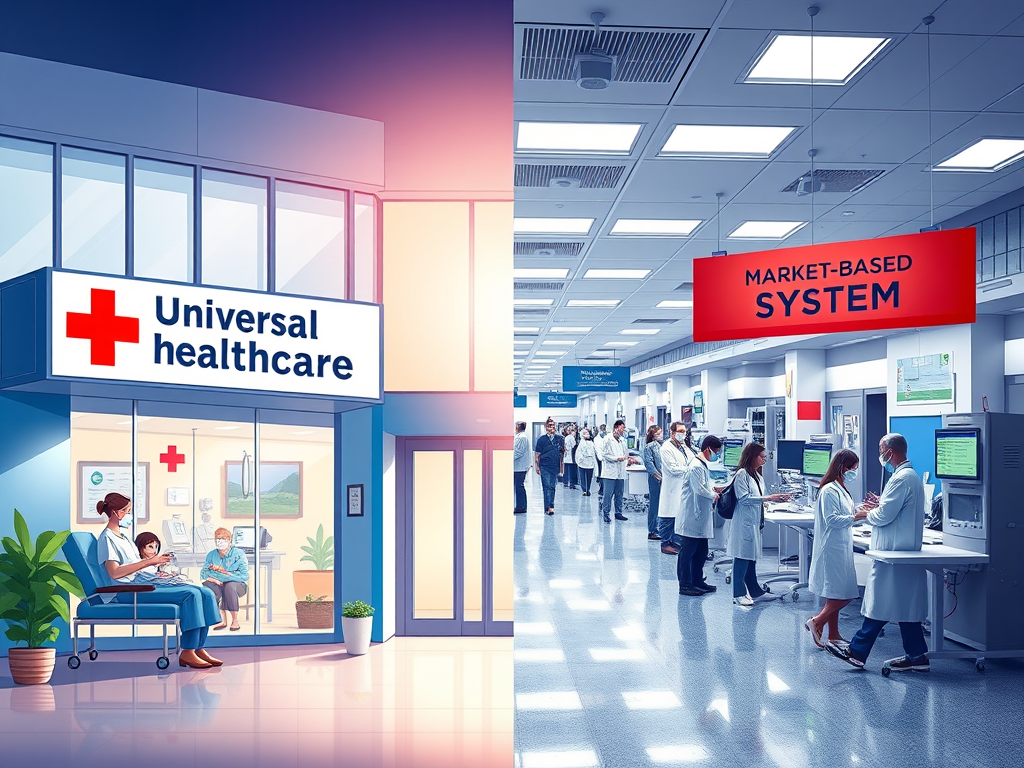
A Tale of Two Systems: Canada vs. US Healthcare
The healthcare systems of Canada and the United States, two nations sharing the world’s longest undefended border, represent fundamentally different approaches to a universal need. While both aim to provide quality care, their structures, funding, and philosophies lead to vastly different experiences for patients and providers alike. Let’s dive deep into a comparison, exploring the pros, cons, quality of care, professional training, and patient satisfaction, spiced with some real-world perspectives.
System Fundamentals: A Philosophical Divide
Canada: Universal Healthcare (Medicare)
Canada operates on a single-payer system, often referred to as “Medicare,” where healthcare services are primarily funded through taxes and administered by provincial and territorial governments. The core principle is universal access based on need, not ability to pay.
United States: A Hybrid Market-Based System
The US system is a complex mosaic of private insurance, employer-sponsored plans, and public programs like Medicare (for seniors and some disabled individuals) and Medicaid (for low-income individuals). It’s largely market-driven, with significant out-of-pocket costs and a strong emphasis on private provision of services.
Pros and Cons: A Closer Look
Canada – Pros:
- Universal Access: No Canadian will go bankrupt due to medical bills. Essential services are covered, ensuring everyone has access to necessary care regardless of income or employment status.
- Lower Administrative Costs: A single-payer system generally leads to less bureaucracy and lower administrative overhead compared to the fragmented US model.
- Preventative Care Focus: With a focus on population health, there’s often a greater emphasis on preventative care and public health initiatives.
Canada – Cons:
- Wait Times: This is arguably the most significant drawback. Patients often face lengthy wait times for specialist appointments, non-emergency surgeries, and diagnostic tests.
- Limited Choice (Private Options): Private insurance for services covered by the public system is generally prohibited, limiting options for those who might want to pay to expedite care.
- Less Access to Cutting-Edge Technology (Potentially): While not always true, the slower adoption of some expensive medical technologies due to budget constraints can sometimes be a concern.
United States – Pros:
- Innovation and Technology: The competitive, market-driven nature of the US system often fosters rapid adoption of new medical technologies, drugs, and specialized treatments.
- Shorter Wait Times (for those with good insurance): Patients with comprehensive private insurance often experience shorter wait times for appointments and procedures.
- Greater Choice of Providers: A vast network of hospitals and specialists offers patients more options in choosing their healthcare providers.
United States – Cons:
- High Costs and Medical Debt: This is the most glaring issue. Healthcare in the US is extraordinarily expensive, leading to significant out-of-pocket costs, high deductibles, and a leading cause of bankruptcy.
- Lack of Universal Coverage: Millions of Americans remain uninsured or underinsured, leading to delayed or forgone care and worse health outcomes.
- Administrative Complexity: The multi-payer system with numerous insurance companies, billing codes, and regulations creates immense administrative burdens for providers and patients alike.
Quality of Care: A Nuanced Perspective
Assessing “quality of care” is complex, as it encompasses everything from patient outcomes to the availability of specialized treatments.
Canada:
Canadian healthcare generally boasts excellent outcomes for many conditions, particularly in primary care and public health metrics. However, the wait times can impact the timeliness of care for certain conditions, potentially affecting outcomes. For instance, a patient needing hip surgery might have to endure chronic pain for months while waiting.
United States:
The US excels in specialized and high-tech care, particularly for complex and rare diseases, often setting global benchmarks in medical research and advanced treatments. However, these benefits are not evenly distributed. For those without adequate insurance, quality of care can be severely compromised, leading to a significant disparity in health outcomes across socioeconomic lines.
Training for Doctors and Nurses: Rigor and Similarities
The training for doctors and nurses in both Canada and the US is incredibly rigorous and largely comparable in its foundational principles and standards.
Doctors: Both countries require a bachelor’s degree followed by medical school (typically 4 years), residency training (3-7 years depending on specialization), and licensing exams. Canadian medical schools are publicly funded, resulting in lower tuition fees for Canadian citizens and permanent residents compared to the often exorbitant costs of US medical schools.
Nurses: Nursing education pathways are also similar, ranging from diplomas and associate degrees to bachelor’s and master’s degrees. Both countries have stringent licensing requirements and professional standards.
A significant difference, however, lies in the financial burden of this training. US medical and nursing students often graduate with substantial debt, influencing career choices and potentially contributing to higher costs of care in the long run.
Patient Satisfaction: A Mixed Bag
Patient satisfaction is subjective and often tied to personal experiences, but some general trends emerge.
Canada:
Canadians generally express high satisfaction with the principle of universal healthcare and the financial security it provides. “I never have to worry about a bill when I go to the doctor,” states Sarah L., a teacher from Toronto. However, frustration often arises from the practicalities. “The care itself is usually excellent once you get in, but the wait to see a specialist for my knee has been over six months,” laments David P., a retired engineer from Vancouver.
United States:
Americans with excellent insurance often report high satisfaction with the speed of access and the choice of providers. “My doctor is fantastic, and I can usually get an appointment within a day or two,” says Mark T., a tech executive from California. However, the financial stress is a constant undercurrent. “The quality of care for my husband’s cancer was top-notch, but the bills were astronomical, even with good insurance. We’re still paying them off,” shares Emily R., a small business owner from Ohio.
Voices from the Field: Patients, Providers, and Corporations
Patients:
- Canadian Patient: “Knowing that I won’t lose my house if I get sick is a profound comfort. It’s not perfect, and I’ve waited for tests, but I wouldn’t trade that peace of mind.” – Maria G., Nova Scotia
- US Patient: “When I had my heart attack, I got the best care immediately. But the fear of what it would cost me without insurance was almost as bad as the heart attack itself.” – Robert S., Texas
Healthcare Workers:
- Canadian Doctor: “We definitely feel the resource crunch and the pressure of wait lists. It’s frustrating when you know a patient needs care, and they have to wait. But the equity of the system, knowing everyone gets care, is why I practice here.” – Dr. Anya Sharma, Family Physician, Alberta
- US Nurse: “I’ve seen incredible medical advancements save lives daily. But I also see patients rationing insulin or delaying necessary procedures because they can’t afford it. That’s a moral injury to healthcare providers.” – Jessica Chen, RN, New York
Corporations (General Perspective, often anonymized due to sensitivity):
- Canadian Health Administrator (Provincial Health Authority): “Our focus is on managing resources effectively to provide universal access. It’s a constant balancing act between demand, budget, and maintaining quality within a publicly funded framework.”
- US Insurance Executive: “We innovate to offer a range of plans that meet diverse needs and budgets. The market drives efficiency and choice, allowing individuals to select the coverage that’s right for them.” (This perspective often emphasizes individual responsibility and market solutions, downplaying systemic issues of access and affordability).
- US Pharmaceutical Company Executive: “Our research and development, funded by market incentives, leads to groundbreaking treatments that benefit patients globally. The pricing reflects the immense investment and risk involved in bringing new drugs to market.” (This view often supports high drug prices as necessary for innovation).
Conclusion: Two Paths, Shared Goals
Ultimately, both the Canadian and US healthcare systems strive to provide care for their populations, but they achieve this through vastly different mechanisms, each with its inherent strengths and weaknesses. Canada prioritizes universal access and equity, even if it means longer wait times. The US champions innovation and immediate access for those who can afford it, but struggles with the profound issues of cost and equitable coverage.
Understanding these differences is crucial for any meaningful discussion about healthcare reform, as the ongoing debate in both nations continues to seek the elusive balance between access, quality, and affordability.

 Canadian Country Life
Leave a comment