
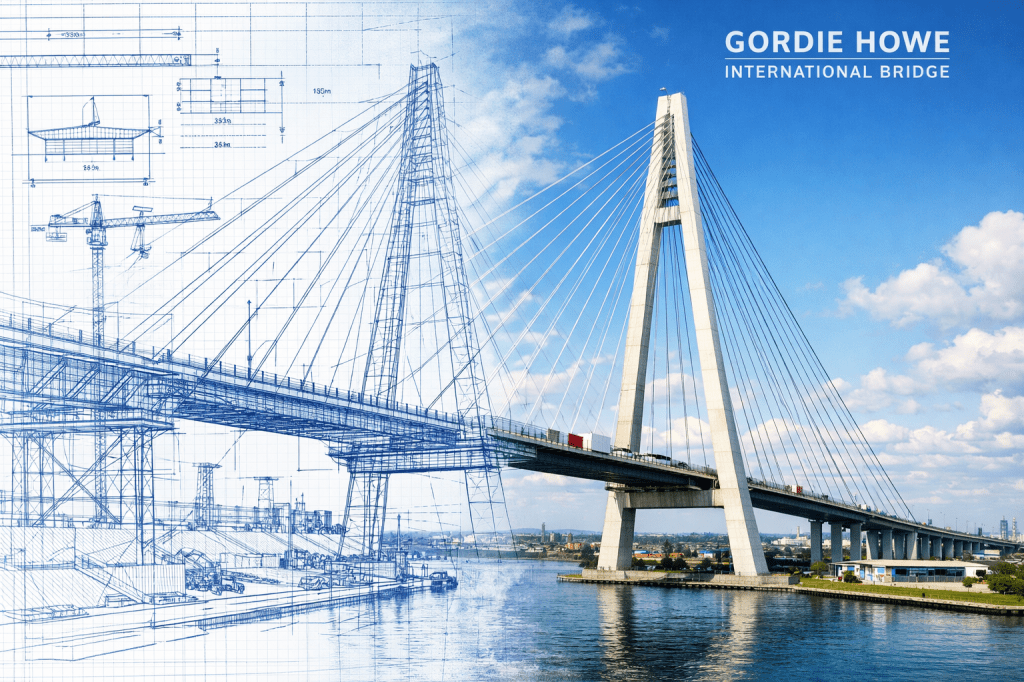
The Gordie Howe International Bridge: A Monument to Cross-Border Connection
The Gordie Howe International Bridge isn’t just a bridge. It’s a colossal undertaking. It serves as a testament to international cooperation. It is a vital artery for the economies of both Canada and the United States. This ambitious project, years in the making, promises to reshape trade, tourism, and transportation between Windsor, Ontario, and Detroit, Michigan.
A Look at the Price Tag and Funding
Building a bridge of this magnitude comes with a significant cost. The total project cost is estimated to be CAD$5.7 billion (approximately US$4.4 billion). This comprehensive figure includes the bridge itself. It also covers the construction of new port of entry facilities in both countries. Upgraded infrastructure on both sides and financing costs are also part of the estimate.
The funding structure is unique and highlights the collaborative nature of the project. Canada is fully funding the construction of the bridge and the Canadian port of entry. It is also funding a significant portion of the US port of entry. This upfront investment by Canada will be recouped through toll revenues collected on the bridge once it’s operational. The US side, through the Michigan Department of Transportation (MDOT), is responsible for the US approach roads and associated infrastructure.
How it Will Be Used: More Than Just a Crossing
The Gordie Howe International Bridge primarily aims to facilitate the efficient movement of people. It also ensures the efficient movement of goods across the Detroit River. It will serve as a critical link for:
- Commercial Traffic: As one of the busiest commercial border crossings in North America, the existing Ambassador Bridge is often congested. The Gordie Howe Bridge will provide much-needed additional capacity, reducing wait times for commercial trucks and streamlining supply chains. This is particularly crucial for the automotive industry, which relies heavily on just-in-time delivery between plants in both countries.
- Passenger Vehicles: While commercial traffic is a major focus, the bridge will also accommodate passenger vehicles. This offers travelers another option for crossing the border. It will potentially ease congestion at existing crossings.
- Active Transportation: The bridge will feature a multi-use path for pedestrians and cyclists. This promotes active transportation. It connects communities on both sides of the border in a new way.
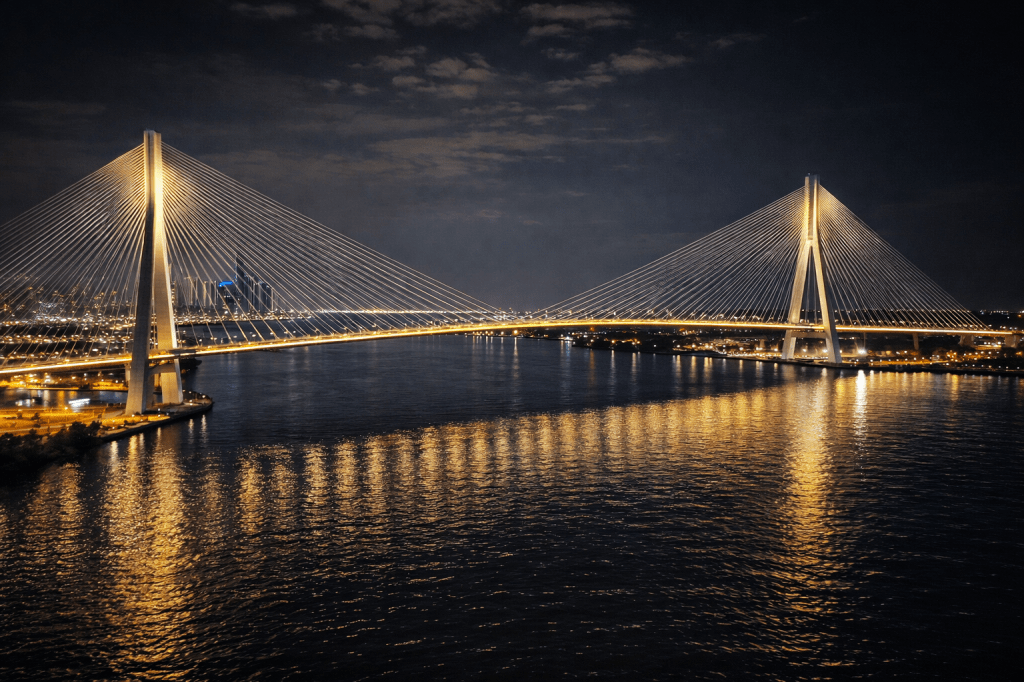
A delay or blockage of the Gordie Howe International Bridge would have significant economic repercussions for Canada. It would also affect the United States economically. It would also lead to diplomatic repercussions, especially as the project approaches its scheduled early 2026 opening.
Economic Impact on Both Countries
The bridge is a critical component of the North American supply chain, especially for the automotive industry.
- For the United States (Michigan): Leaders like Senator Elissa Slotkin have issued warnings. They state that blocking the bridge would amount to “economic sabotage.” It would result in higher costs for Michigan businesses, less secure supply chains, and the potential loss of jobs. The Detroit-Windsor corridor is one of the busiest trade routes in North America. The new bridge is expected to save truckers approximately $2.3 billion over 30 years by reducing wait times.
- For Canada: Having fully financed the CAD$6.4 billion project, Canada relies on the bridge opening to begin recouping its investment through toll revenues. A blockage would freeze this income stream. It would also disrupt the movement of goods. These goods currently account for about 25% of all surface trade between the two nations.
Political and Legal Tensions
The threat to block the opening has introduced fresh uncertainty into an already strained relationship:
- Permit Disputes: The White House has suggested that President Trump has the legal authority to amend the Presidential Permit. He also has the authority to revoke the permit required for international border crossings.
- Ownership Demands: Trump has argued that the U.S. should own “at least one half” of the asset, despite Canada funding the construction. The bridge is currently under a joint-ownership agreement between Canada and the State of Michigan. Canada will operate it until construction costs are recovered.
- Trade Linkage: The bridge has become a bargaining chip in broader trade disputes. This includes Canadian dairy tariffs and Canada’s potential trade deals with China.
Strategic Consequences
- Infrastructure Redundancy: Without the Gordie Howe bridge, there is a significant reliance on the aging, privately owned Ambassador Bridge. It serves as the only primary artery for heavy freight. This dependency poses a risk. A single point of failure at that crossing would leave both economies vulnerable to massive disruptions.
- Diplomatic Detente: Prime Minister Mark Carney has expressed confidence. He believes the situation will be resolved through negotiation. However, the threat complicates the upcoming USMCA review. It also signals a move toward more transactional border relations.
Legal Mechanisms to Block the Opening
While the bridge physically exists, the President has several “levers” to prevent it from functioning as an international crossing:
- Revocation of the Presidential Permit: The construction and operation of cross-border infrastructure require a Presidential Permit. Under Executive Order 13867, the President has the authority to modify, suspend, or revoke these permits. Trump has claimed he will use this power unless the U.S. is “fully compensated” and granted at least 50% ownership of the asset.
- Designation of Port of Entry: Even if the bridge is complete, it cannot operate without U.S. Customs and Border Protection (CBP) staffing. By withholding federal resources, the administration could effectively turn the bridge into a “bridge to nowhere.” They could also rescind the official “Port of Entry” status, which was just finalized in January 2026.
- Steel & Content Waivers: Trump has criticized a 2012 waiver. This waiver allowed the project to bypass “Buy America” requirements for steel. He could potentially use non-compliance with current trade standards as a legal basis to withhold final operational approvals.
Current Construction Status (February 2026)
- Physical Completion: Major construction is finished. The bridge deck is fully connected, and the focus is now on testing and commissioning electrical, drainage, and security systems.
- The US Port of Entry: This remains the most critical physical bottleneck. While the Canadian side is nearly ready, the U.S. facility has faced minor delays, though it is still on track for an early 2026 completion.
- The “Opening Date”: Official estimates still point to a Spring 2026 ribbon-cutting. However, political interference could move this to late 2026 or beyond.
Strategic and Diplomatic Fall-out
The dispute has forced a rapid diplomatic response:
- The “Shared Ownership” Defense: Prime Minister Mark Carney and former Michigan Governor Rick Snyder have both clarified that the U.S. (via the State of Michigan) already owns 50% of the bridge. Canada’s “ownership” is essentially a right to collect tolls until the construction debt is paid off.
- Economic Hostage: Michigan Senator Elissa Slotkin and other regional leaders have labeled the threat “economic sabotage.” They note that Michigan businesses, particularly the Big Three automakers, would be the primary victims of a stalled opening.
- Trade Linkage: The bridge is being used as leverage for unrelated issues. These issues include Canadian dairy tariffs, Ontario’s alcohol retail policies, and Canada’s trade relationship with China.
Summary of Potential Consequences
| Stakeholder | If the Bridge Opens | If Trump Prevents Opening |
| Michigan Businesses | Shorter wait times; $2.3B in saved shipping costs. | Supply chain bottlenecks; higher consumer prices. |
| Canadian Government | Recoups $6.4B investment through tolls. | Immediate $6.4B financial loss; no revenue stream. |
| Commuters/Travelers | First-ever pedestrian/bike crossing; less traffic. | Continued reliance on the aging Ambassador Bridge. |
| The Moroun Family | Loss of monopoly; lower toll revenue. | Maintains monopoly over the Detroit-Windsor corridor. |
Let me know what you think in the comments.
 Canadian Country Life
Leave a comment