
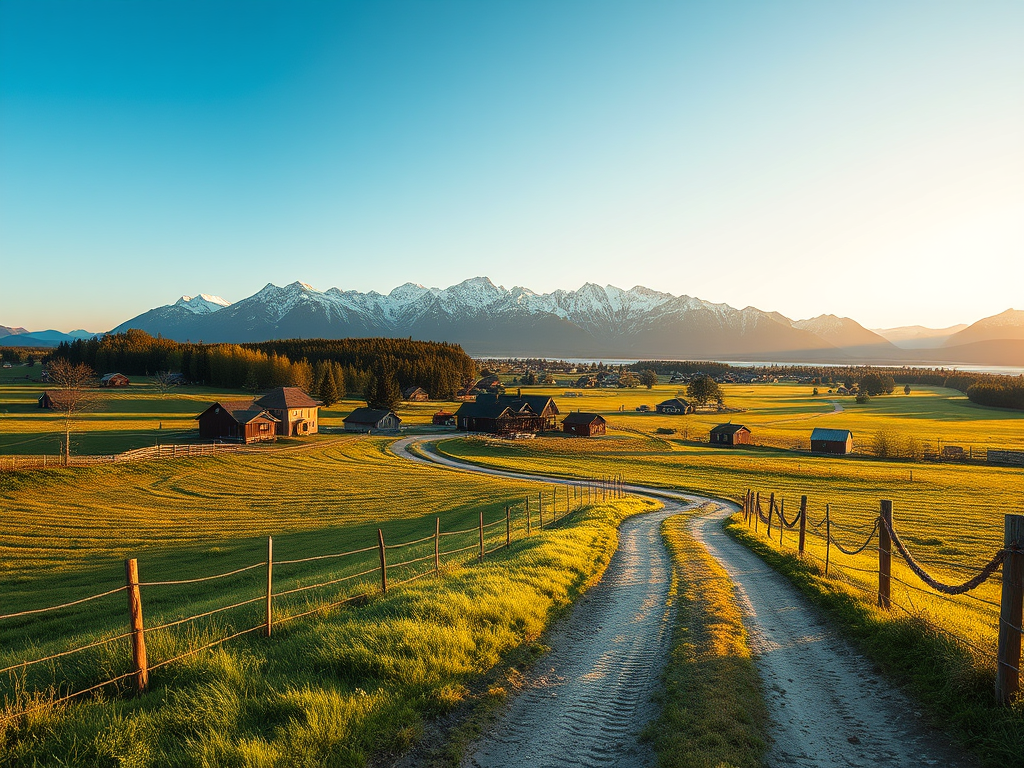
The Heartbeat of the Hinterland: Profiling Canada’s Rural Soul
Canada is often defined by its glittering skylines in Toronto or Vancouver. However, the true pulse of the country beats in the spaces between the map dots. The fog-swept coasts of Newfoundland reveal a rugged charm. The golden prairies of Saskatchewan display vast openness. Rural Canada is a patchwork of grit and tradition. It is home to people who know their neighbors by name.
In this post, we’re stepping off the Trans-Canada Highway. We will explore the communities and “local legends.” They make rural Canada more than just a scenic drive.
1. The Town of Giants: Vulcan, Alberta
You don’t have to go to outer space to find a community that lives long and prospers. Vulcan, a small agricultural town in southern Alberta, leaned into its name in the 1990s and transformed from a quiet farming hub into the “Star Trek Capital of Canada.”
- The Vibe: A surreal blend of high-tech sci-fi and classic prairie hospitality.
- The Tradition: Every summer, the town hosts VulCON, a convention that brings trekkies from across the globe to rub elbows with wheat farmers.
- The Local Hero: The late Dayna Inez, who was instrumental in the town’s tourism branding. Today, the mantle is carried by the local tourism staff who maintain a 31-foot long replica of the Starship Enterprise.
2. The Island of Artisans: Fogo Island, Newfoundland
Deep in the North Atlantic, Fogo Island is one of the “four corners of the earth” (according to the Flat Earth Society, anyway). It’s a place where 18th-century Irish and English dialects still linger in the salty air.
- The Tradition: Punt-building. These small, wooden rowing boats are more than vessels; they are a symbol of Newfoundland’s outport survival. The tradition is kept alive through races and wooden boat museums.
- The Local Hero: Zita Cobb. A former high-tech executive who returned to her birthplace to build the world-renowned Fogo Island Inn. She didn’t just build a hotel; she created a social enterprise that ensures every dime of profit goes back into the community to preserve local culture.
3. The Breadbasket Legend: Gravelbourg, Saskatchewan
Often called a “Touch of Europe on the Prairies,” Gravelbourg is a francophone oasis in a sea of golden grain. It is home to the stunning Our Lady of the Assumption Co-Cathedral, a building that looks like it was plucked out of France and dropped into the middle of a wheat field.
- The Vibe: Bilingual, sophisticated, and deeply rooted in the soil.
- The Local Hero: Toon Dreumel. A name synonymous with the famous Gravelbourg Mustard. While the town is small, this mustard is world-class, proving that rural communities can take raw Canadian ingredients and turn them into global gourmet staples.
4. The Winter Warriors: Teslin, Yukon
In the far North, rural life isn’t just a lifestyle; it’s a masterclass in resilience. Teslin sits on the shores of the massive Teslin Lake and is home to the Teslin Tlingit Council.
- The Tradition: Traditional Tlingit Beadwork. The intricate patterns tell stories of clans, ancestors, and the land. It’s a living history passed down through generations in the community’s Heritage Centre.
- The Local Hero: Any of the local Traditional Knowledge Keepers. These elders work tirelessly with the youth to ensure the Tlingit language and subsistence hunting practices don’t vanish in the digital age.
Why Rural Canada Matters
These communities aren’t just “quaint.” They are the economic and cultural backbone of the country. They remind us that:
- Innovation happens in sheds and community halls, not just tech incubators.
- History is something you live, not just something you read in a textbook.
- Community means showing up when the snow is six feet high and the power goes out.
“In the city, you’re an individual. In a small town, you’re a piece of a puzzle. If you aren’t there, there’s a hole.”
Each of these locations carries a unique weight in Canadian history, ranging from pivotal military battles to agricultural innovation and legendary mysteries.
Since these towns are deeply connected to the heritage of Southern Ontario and the Atlantic coast, here is a breakdown of what makes them significant.
Thamesville, Ontario: The Site of a Turning Point
Thamesville is best known for its proximity to the Battle of the Thames (1813), a major engagement during the War of 1812.
- The Fall of Tecumseh: This is the location where the great Shawnee leader Tecumseh was killed. His death effectively ended the Indigenous confederacy that had been allied with the British, changing the course of Canadian-American relations forever.
- The Tecumseh Monument: Just outside the town, a monument stands to honor his bravery and his role in defending what would eventually become Canada.
- Rural Roots: Today, it is a hub for the surrounding agricultural community, known for the “Thamesville Threshing Festival” which celebrates the town’s farming heritage.
Ridgetown, Ontario: The Agriculture Hub
Often referred to as the “Agricultural Capital of the World,” Ridgetown earned this nickname due to the high quality of the soil and the presence of the Ridgetown Campus of the University of Guelph.
- Academic Influence: The University’s presence makes Ridgetown a global center for research in crop science, livestock, and environmental management.
- Historic Architecture: The town is filled with beautifully preserved Victorian homes, reflecting the wealth brought in by the farming boom of the late 19th century.
- The Ridge: The town sits on a literal “ridge”—a geological formation left by glacial activity that provides the region with its unique drainage and fertile land.
Bothwell, Ontario: The Oil Boom Town
Bothwell has one of the most colorful histories in Southwestern Ontario, primarily due to the Oil Boom of the 1860s.
- The “Black Gold” Rush: For a brief period, Bothwell was a wild frontier town. After oil was discovered, the population exploded overnight with speculators, drillers, and businessmen.
- The Bothwell-Zone Oil Field: Unlike many other boom towns that went dry, Bothwell still has active “nodding donkey” oil pumps dotting the landscape, some of which use technology over a century old.
- The Old Town Hall: This historic building serves as a museum and a reminder of the town’s era of immense industrial wealth.
Oak Island, Nova Scotia: Canada’s Greatest Mystery
Located in Mahone Bay, Oak Island is arguably the most famous small island in the world due to the “Money Pit”—a treasure hunt that has lasted over 220 years.
- The Money Pit: Since 1795, searchers have been trying to reach the bottom of a complex, man-made shaft. The “treasure” theories range from pirate gold (Captain Kidd) to the lost manuscripts of William Shakespeare or even the Knights Templar’s Holy Grail.
- The Curse: Legend says that seven people must die before the treasure is found; to date, six lives have been lost in various excavation accidents.
- The Landscape: The island is privately owned but has become a major tourism draw due to the long-running television series The Curse of Oak Island, which documents the ongoing efforts of the Lagina brothers to solve the mystery.
Comparison of Regional Significance
| Location | Key Theme | Notable Landmark |
| Thamesville | Military History | Tecumseh Monument |
| Ridgetown | Agriculture | U of G Ridgetown Campus |
| Bothwell | Industry/Oil | Bothwell-Zone Oil Fields |
| Oak Island | Mystery/Lore | The Money Pit |
 Canadian Country Life
Leave a comment