
Canada: A Century of Transformation – Then, Now, and Tomorrow
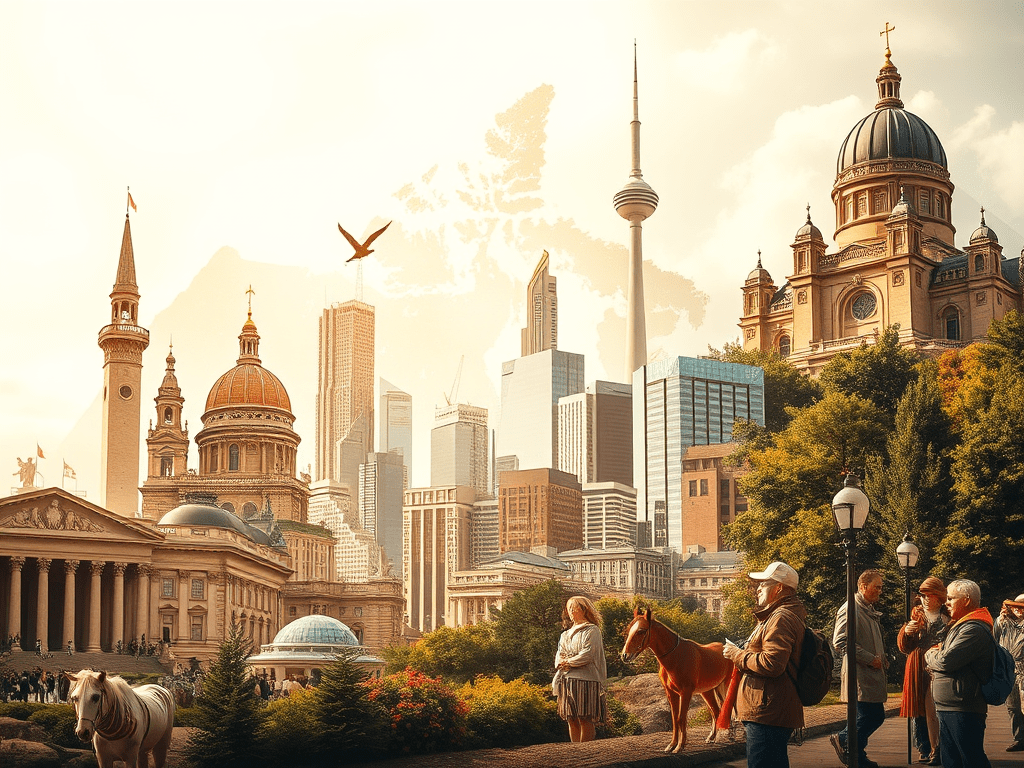
Canada, a vast and diverse nation, has undergone an incredible metamorphosis since the turn of the 20th century. From a nascent country with a largely agrarian economy to a modern, multicultural powerhouse, its evolution is a testament to progress, resilience, and a deep connection to its stunning natural landscapes. Let’s take a journey through time, comparing Canada then, now, and peering into what the future might hold.
Population: From Scarcity to Sprawl
Then (Early 1900s): At the dawn of the 20th century, Canada was sparsely populated, with a population hovering around 5.4 million people in 1900. Much of the population was concentrated in the eastern provinces, with vast stretches of the west still largely unsettled. Life expectancy was significantly lower, and birth rates were higher.
Now (2020s): Today, Canada boasts a population exceeding 40 million, a remarkable eight-fold increase. This growth has been fueled by immigration, a cornerstone of Canadian identity, and improved healthcare leading to higher life expectancy. Urban centers have boomed, with cities like Toronto, Vancouver, and Montreal becoming bustling metropolises.
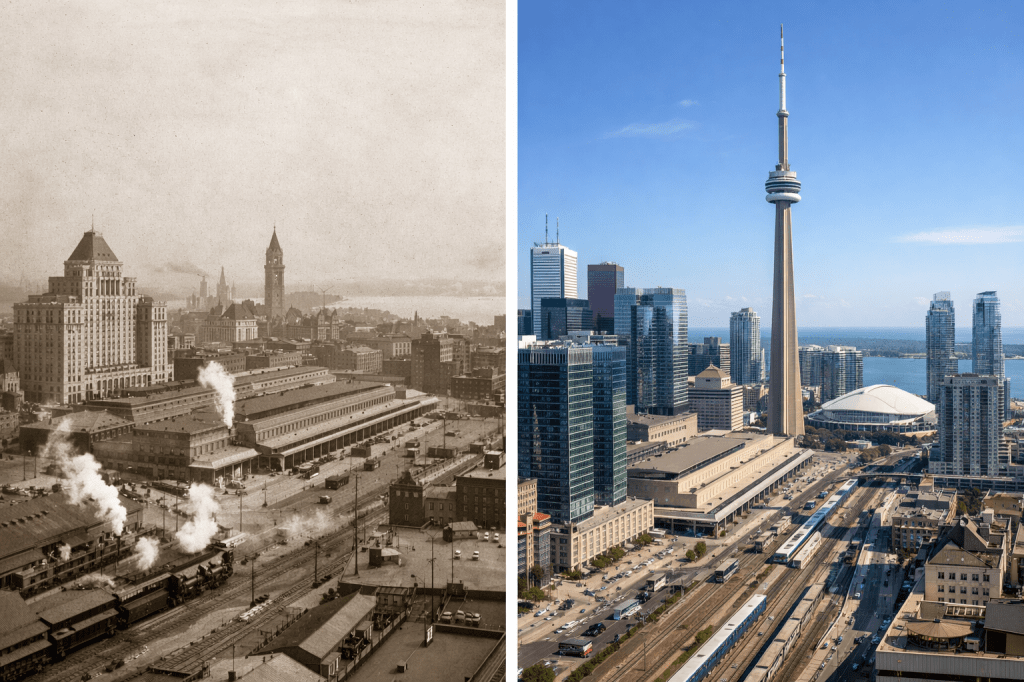
Future (Mid-21st Century): Projections suggest Canada’s population will continue to grow, potentially reaching 50-60 million by the mid-century. This growth will likely be managed with an increased focus on sustainable urban development. There will be an emphasis on smart cities and the integration of green spaces. These measures will accommodate a larger population without sacrificing quality of life. We might see vertical farms, elevated pedestrian pathways, and more self-sufficient community designs.
Roads and Transportation: From Horsepower to Hyperloops?
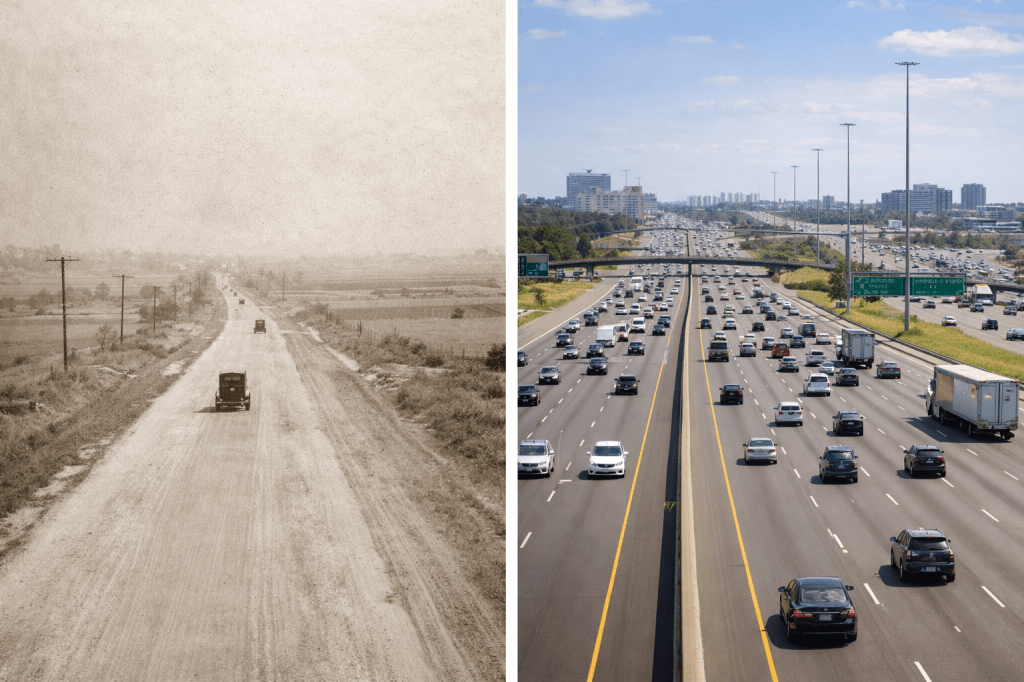
Then (Early 1900s): Roads were primarily unpaved, dusty tracks, often impassable in inclement weather. Horse-drawn carriages and rudimentary bicycles were common modes of transport. The railway system was the backbone of long-distance travel and freight, connecting nascent towns and facilitating westward expansion.
Now (2020s): Canada boasts an extensive network of paved highways, expressways, and urban roads, connecting communities from coast to coast. Cars are ubiquitous, and public transit systems, while varying in development, are crucial in major cities. Air travel has become commonplace for long distances.
Future (Mid-21st Century): The future of Canadian transportation will likely be driven by sustainability and efficiency. We can anticipate widespread adoption of electric vehicles, autonomous driving, and advanced public transit. High-speed rail could connect major city corridors. Experimental modes like hyperloops might also begin to emerge. This would revolutionize inter-city travel. Urban areas might prioritize pedestrian and cycling infrastructure, creating more livable, less car-dependent environments.
Forest Size and Environmental Stewardship: A Shifting Landscape
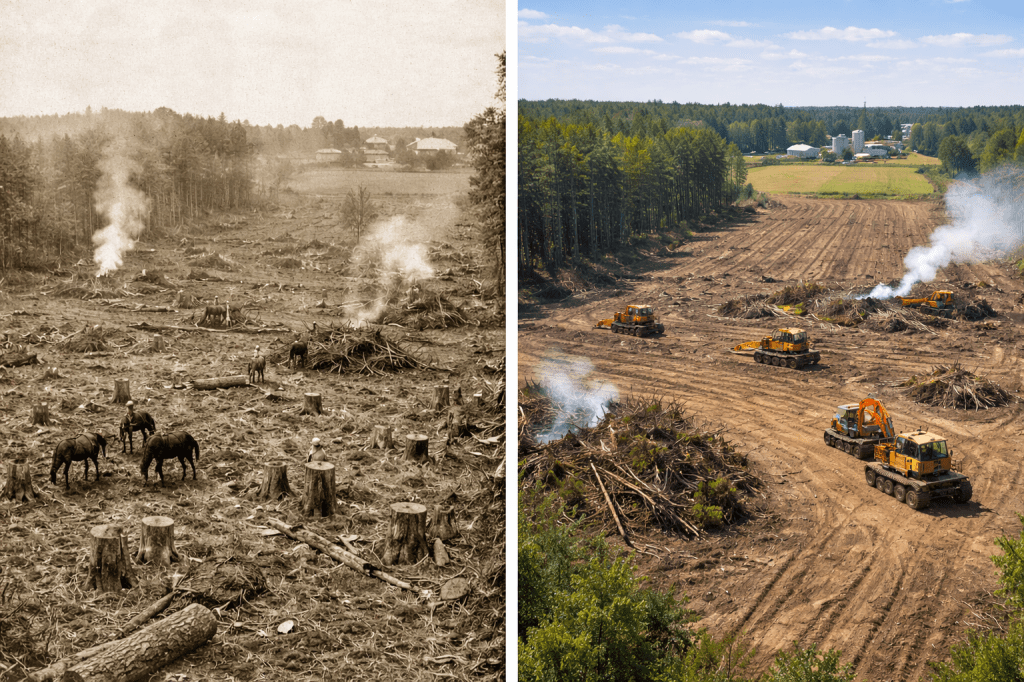
Then (Early 1900s): Canada was, and still is, a nation defined by its vast forests. In the early 20th century, these forests were largely untouched by industrial-scale logging in many regions, though resource extraction was beginning to ramp up. The understanding of ecological impact was limited compared to today.
Now (2020s): While Canada still boasts an immense forest cover (nearly 3.5 million square kilometers, or about 9% of the world’s forests), there have been significant changes due to logging, wildfires, and urban expansion. However, there’s also a much stronger focus on sustainable forest management, reforestation efforts, and conservation of old-growth forests and biodiversity. Climate change impacts, such as increased frequency and intensity of wildfires, are a growing concern.
 Canadian Country Life
Leave a comment