
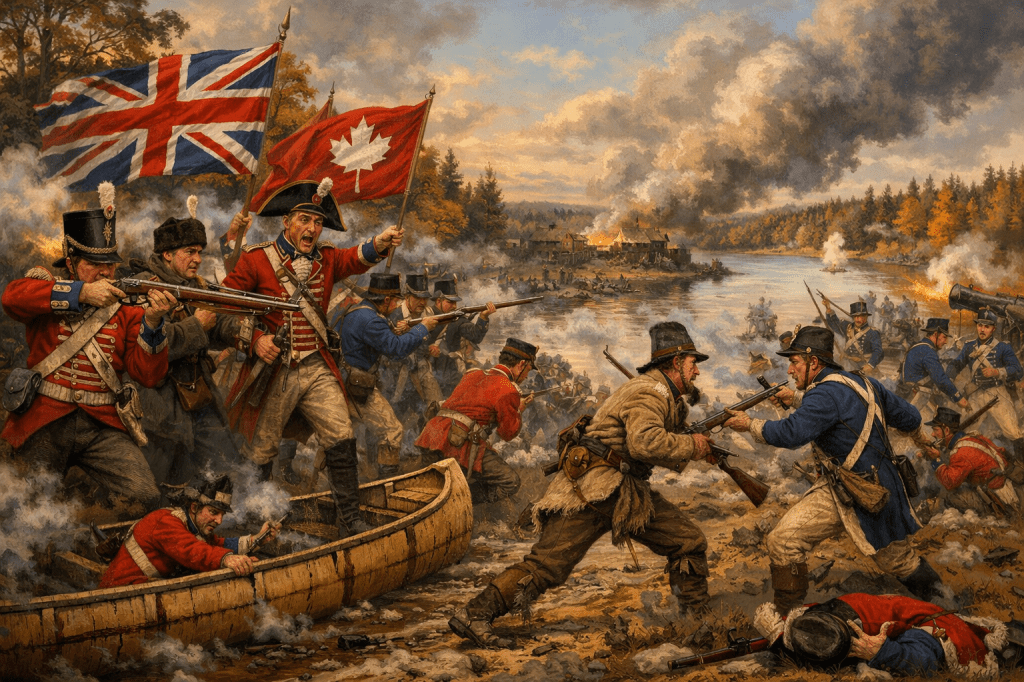
The War of 1812: A Defining Conflict for Canada and Southern Ontario
The War of 1812 is often overshadowed by other conflicts in history, yet it was a turning point that shaped the identities of both Canada and the United States. For Southern Ontario, in particular, this war was a deeply significant event that left a lasting impact on its geography, society, and identity.
The Roots of the Conflict
The origins of the War of 1812 lie in the complex geopolitical landscape of the early 19th century. Europe was gripped by the Napoleonic Wars, a long-running conflict between France and a coalition of European powers, including Great Britain. To counter Napoleon’s growing power, Britain imposed a series of trade restrictions (known as the Orders in Council) that negatively impacted American commerce. The British also frequently stopped American ships at sea and forced American sailors into service in the Royal Navy, a practice known as “impressment.” These actions were seen by many Americans as an infringement on their national sovereignty.
Furthermore, there was a growing desire in the United States to expand its territory northward into Canada, a colony of Britain. This expansionist sentiment, coupled with the grievances over maritime rights, created a climate ripe for war. In June 1812, US President James Madison declared war on Great Britain.
Southern Ontario: A Battleground
Southern Ontario, then a sparsely populated British colony known as Upper Canada, quickly became a focal point of the war. Its proximity to the United States made it vulnerable to invasion. Several significant battles and skirmishes were fought in the region, leaving an indelible mark on its landscape.
The Niagara Peninsula, bordering the United States, witnessed some of the war’s most intense fighting. The Battle of Queenston Heights in 1812, though a tactical victory for the British, resulted in the death of the popular and effective British general, Sir Isaac Brock. This loss was a significant blow to the defense of Upper Canada. The subsequent battles of Chippawa and Lundy’s Lane, fought in 1814, were particularly brutal and bloody affairs, with neither side able to achieve a decisive victory.
The Impact on the Region and Beyond
The War of 1812 had profound consequences for Southern Ontario and for the development of Canada as a whole.
For Southern Ontario, the war was a period of devastation and hardship. Farms were plundered, towns were burned, and populations were displaced. The region suffered significant economic disruption, as trade was curtailed and resources were diverted to the war effort. The conflict also fostered a sense of insecurity and vulnerability among the region’s inhabitants.
However, the war also had a positive impact on the development of a Canadian national consciousness. The shared experience of fighting against a common enemy, the successful defense of the colony, and the emergence of national heroes like Isaac Brock and Laura Secord, contributed to the emergence of a distinct Canadian identity. The war solidified the belief that Canada was a separate entity from the United States, with its own destiny and purpose.
For Canada as a whole, the War of 1812 marked a shift in the relationship with Great Britain. The colonies became increasingly important to the British Empire, and Britain demonstrated its commitment to defending them. This, in turn, led to greater investment in Canadian development and a strengthening of ties between Canada and the mother country.
A Lasting Legacy
The War of 1812 remains a significant event in Canadian history. The battlefields, monuments, and historical sites in Southern Ontario serve as tangible reminders of the conflict and its impact. The war helped to shape Canadian identity, established the border between Canada and the United States, and solidified the relationship between Canada and the British Empire.
Today, the war is a subject of ongoing study and commemoration. Understanding the history of the War of 1812 is essential for appreciating the complexities of Canada’s development and its unique place in the world. As we reflect on this pivotal moment in history, we are reminded of the resilience of the Canadian people and the enduring strength of the nation.
 Canadian Country Life
Leave a comment