
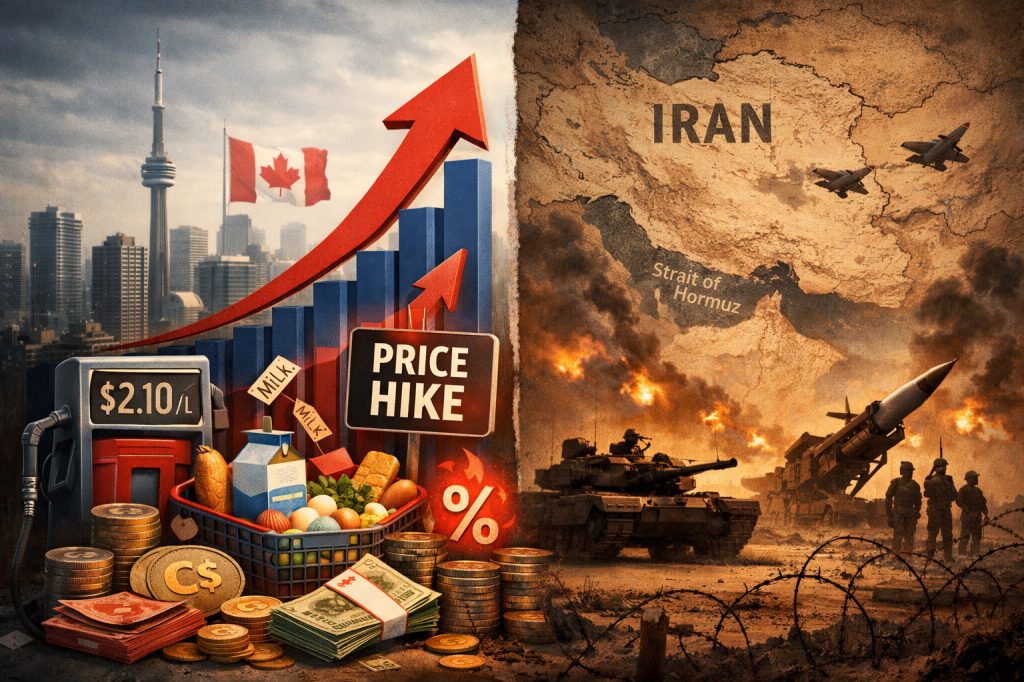
The Ripple Effect: How the Conflict in Iran is Hitting Canadian Wallets
As the military conflict between the U.S.-Israeli alliance and Iran intensifies this March 2026, the shockwaves are traveling far beyond the Middle East. For Canadians, the “front lines” are appearing in more mundane places: the gas station, the heating bill, and the local grocery store.
While Canada is a major energy producer, our economy remains deeply integrated into a global system that reacts instantly to instability in the Persian Gulf. Here is a breakdown of how this war is impacting your daily expenses.
1. Pain at the Pump: Fuel and Gasoline
The most immediate impact has been on gasoline prices. Even though Canada doesn’t import significant amounts of Iranian oil, crude oil is a globally traded commodity. When supply is threatened anywhere, prices rise everywhere.
- The Strait of Hormuz Factor: Approximately 20% of the world’s oil passes through this narrow waterway. With Iran threatening to block the strait and commercial vessels dropping anchor to avoid the crossfire, global supply has tightened.
- Price Spikes: In early March, Brent crude surged toward $120 USD per barrel. This translated to an overnight jump of roughly 10 to 12 cents per litre at Canadian pumps.
- Summer Outlook: Analysts warn of a “triple whammy”: the ongoing war, the seasonal shift to more expensive summer fuel blends, and increased travel demand. If the conflict persists, $2.00/L could become a reality in many provinces.
2. Keeping the Lights On: Fuel Oil and Natural Gas
For Canadians who rely on heating oil—particularly in Atlantic Canada—the timing of this conflict is brutal.
- Heating Oil: Much like gasoline, heating oil is a refined product of crude. As crude prices stay elevated above $95 USD, the cost to refill home tanks is climbing, putting a strain on household budgets during the final weeks of winter.
- Natural Gas: While North America is largely self-sufficient in natural gas, the global market for Liquefied Natural Gas (LNG) is under pressure. As Asian and European countries lose access to Middle Eastern energy, they look to the same global pools Canada taps into, keeping prices higher than they would otherwise be.
3. The “Silent” Inflation: Grocery Stores and Retail
You might not see “Made in Iran” on many products, but the war is driving up the cost of almost everything on the shelves through logistics and production costs.
- Fertilizer and Food: The Middle East is a massive exporter of urea and other nitrogen-based fertilizers. A supply crunch there means higher costs for Canadian farmers this spring, which will inevitably lead to higher prices for bread, meat, and produce by harvest time.
- Shipping Surcharges: Major carriers like Maersk have begun diverting ships around the Cape of Good Hope to avoid the conflict zone. This adds weeks to travel times and introduces “war surcharges,” making imported electronics, clothing, and furniture more expensive.
- The Diesel Trickle-Down: Almost every product in a Canadian store arrived there via a truck running on diesel. As diesel prices track alongside crude oil, transport companies pass those “fuel surcharges” onto retailers, who then pass them onto you.
Summary of Impacts (March 2026)
| Category | Impact Level | Key Driver |
| Gasoline | High | Global crude oil speculation and Strait of Hormuz instability. |
| Groceries | Medium-High | Rising fertilizer costs and diesel fuel surcharges for trucking. |
| Home Heating | Medium | Direct correlation with refined oil product prices. |
| Consumer Goods | Medium | Global shipping diversions and increased freight insurance. |
Pro Tip: Keep an eye on the “loonie.” While high oil prices often boost the Canadian dollar (which can make imports cheaper), the broader economic uncertainty of a war often drives investors to the U.S. dollar, potentially neutralizing any “oil boost” for our currency.
 Canadian Country Life
Leave a comment