
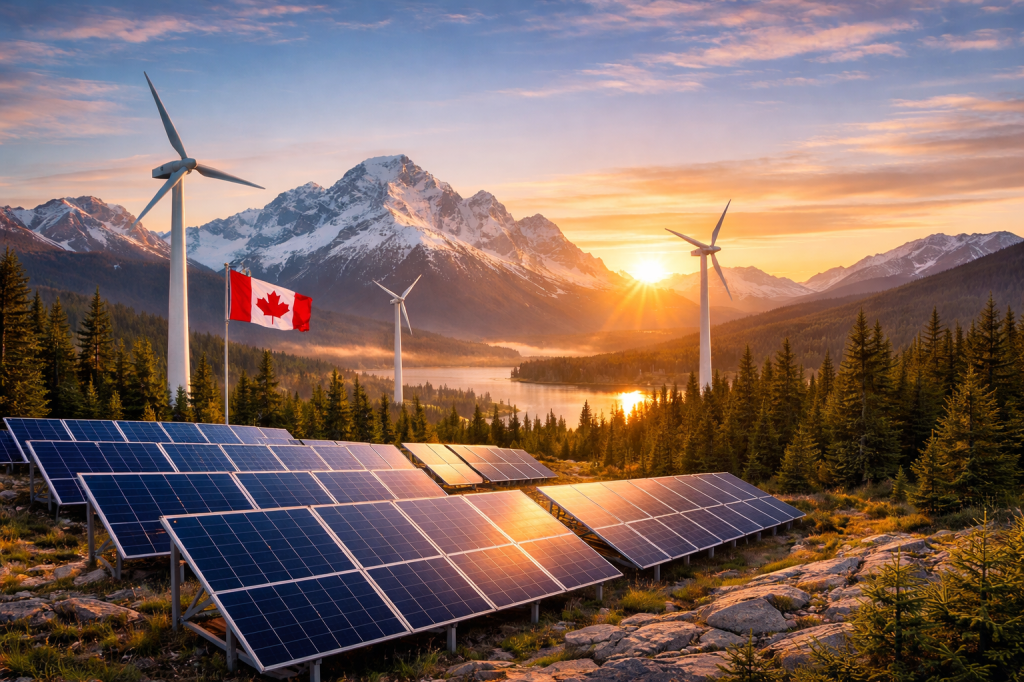
As the world grapples with the dual pressures of energy security and decarbonization, the global spotlight has shifted toward a familiar giant with a new set of tools. Canada, long recognized as an oil and gas titan, is rapidly transforming into a “tri-threat” energy superpower.
By leveraging its massive oil reserves alongside a surge in lithium and uranium production, Canada is positioning itself as the indispensable partner for a world in transition. Here is how these three resources are shaping our global energy future in 2026.
1. Oil: The Anchor of Energy Security
While the “green transition” is well underway, the reality of 2026 is that global energy reliability still rests on the shoulders of liquid gold.
Canada currently holds the third-largest proven oil reserves in the world, with approximately 166 billion barrels primarily in the oil sands. With the completion of major infrastructure like the Trans Mountain Pipeline Expansion, Canada has tripled its capacity to reach Pacific markets, providing a democratic and stable alternative to volatile supply routes in the Middle East.
- The 2026 Shift: Canadian producers are no longer just focused on volume. The “Net Zero by 2050” commitment has turned the oil sands into a laboratory for carbon capture and storage (CCS).
- Market Status: With WTI crude hovering around $75 and Brent at $81, Canada remains a high-margin, low-risk supplier for allies looking to decouple from autocratic energy regimes.
2. Lithium: The “White Gold” of the North
If oil is the fuel of the present, lithium is the currency of the future. As of early 2026, Canada is emerging as a top-tier global player in the lithium market, currently holding about 7% of global reserves.
The Canadian advantage isn’t just the raw ore; it’s the vertical integration. Unlike many nations that ship raw materials abroad for processing, Canada is investing billions into domestic refining.
- Strategic Alliances: In March 2026, the Canadian government announced over $12 billion in new partnerships under the Critical Minerals Production Alliance. This includes massive processing hubs in Ontario and Quebec that convert spodumene into battery-grade lithium hydroxide.
- The Sustainability Edge: Canadian lithium is often extracted using hydroelectric power, giving it a significantly lower carbon footprint than lithium produced in other jurisdictions.
3. Uranium: Powering the Clean Baseload
Nuclear energy is witnessing a global renaissance as the only scalable, carbon-free baseload power source. This has put Canada’s Athabasca Basin—home to the highest-grade uranium on the planet—at the center of the world’s clean energy strategy.
- Price Surge: Uranium spot prices have seen a “structural bull market” in 2026, recently testing the $100/lb mark. This is driven by a global deficit and a push by the U.S. and EU to eliminate reliance on Russian nuclear fuel.
- Saskatchewan’s Dominance: Canada is the world’s second-largest producer of uranium. With projects like NexGen’s Arrow and Cameco’s Tier-1 assets, Canada is the primary “coiled spring” ready to meet the massive demand from a new generation of Small Modular Reactors (SMRs).
The Big Picture: A Resource Superpower Reborn
In 2026, the narrative has moved past “Oil vs. Renewables.” The global energy strategy is now about diversified resilience.
Canada’s unique position allows it to provide the oil needed for current stability, the uranium needed for clean baseload power, and the lithium required to electrify the transport sector. Through the new First and Last Mile Fund, the country is finally connecting its remote northern riches to the global south and east, ensuring that “Made in Canada” energy is the backbone of the next industrial era.
Key Takeaway: For investors and policymakers alike, Canada is no longer just a “boring” resource play. It is the strategic vault for the minerals and fuels that will determine which nations thrive in the 2030s.
 Canadian Country Life
Leave a comment