
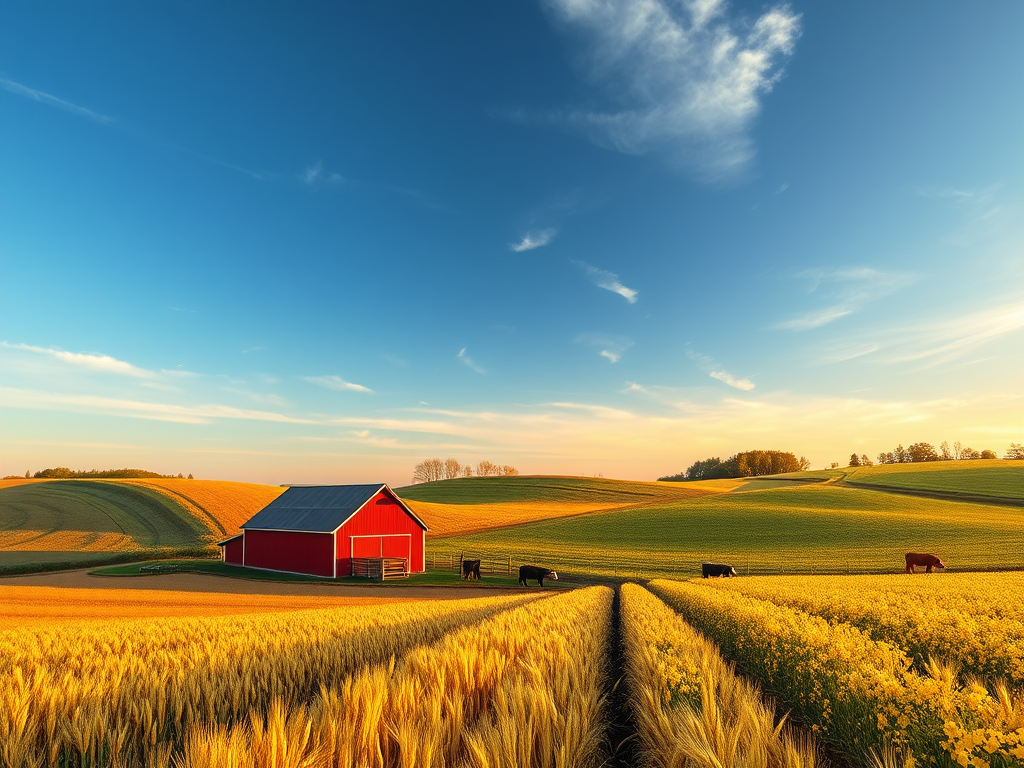
The Great White North: How Canadian Farms Feed the World
When you picture the Canadian landscape, your mind might drift to snow-capped Rockies or the rugged Atlantic coastline. But for billions of people around the globe, Canada looks like something else entirely: dinner.
As of 2026, Canada has solidified its status as an agricultural superpower. With a relatively small population and a massive, fertile landmass, Canadian farmers produce far more than we could ever eat at home. Here’s a look at how the Great White North is quietly—and efficiently—becoming the world’s pantry.
By the Numbers: Canada’s Global Reach
Canada is currently the fifth-largest global exporter of agri-food products, shipping to nearly 200 countries. To put that into perspective, the average Canadian farm now produces enough food to feed over 120 people—a 1,100% increase from a century ago.
In the 2025–2026 crop year, Canadian production of principal field crops hit a staggering 107 million tonnes, the largest harvest on record.
| Product | Export Share | Why It Matters |
| Canola | ~90% | Canada is the world’s top producer; used for healthy cooking oil and biofuel. |
| Pulses | ~95% | We are the global leader in lentils and dry peas—critical protein for plant-based diets. |
| Soybeans | ~70% | High-quality beans feeding livestock and making tofu across Asia. |
| Durum Wheat | High | The secret ingredient in the world’s best Italian pasta is often Canadian durum. |
More Than Just Grains: The Regional Breakdown
Agriculture in Canada isn’t a monolith; it’s a diverse ecosystem that shifts with the geography.
- The Prairies (AB, SK, MB): The “Breadbasket.” This region accounts for 80% of Canada’s farmland, producing the lion’s share of wheat, canola, and cattle.
- Central Canada (ON, QC): The hub for dairy and corn. Ontario and Quebec also lead in fruit, vegetables, and the world’s most famous export: maple syrup.
- The Atlantic: Famous for those world-class PEI and New Brunswick potatoes, as well as a booming wild blueberry industry.
- The Pacific: British Columbia’s interior is a powerhouse for high-value horticulture, including cherries, apples, and premium wines.
Sustainability: Growing More with Less
The world doesn’t just want food; it wants responsibly grown food. Canadian farmers are leading the way in “sustainable intensification”—the art of increasing yields while shrinking the environmental footprint.
- No-Till Farming: By leaving soil undisturbed, farmers keep carbon trapped in the ground rather than releasing it into the atmosphere.
- Precision Tech: Modern tractors use GPS and AI to apply fertilizer with pinpoint accuracy, ensuring none is wasted or leached into waterways.
- Climate Resilience: Scientists are developing “future-proof” seeds—like heat-resistant wheat and drought-tolerant canola—to ensure global food security remains stable even as the climate shifts.
The 2026 Outlook
While 2026 has brought its share of challenges—from energy price spikes affecting fertilizer costs to global trade shifts—Canada’s role remains vital. The federal government’s recent Sustainable Agriculture Strategy is designed to keep Canadian products competitive and eco-friendly, ensuring that when the world gets hungry, Canada is ready to answer the call.
Next time you see a field of yellow canola or a bin of lentils, remember: that’s not just a crop. It’s a global lifeline.
 Canadian Country Life
Leave a comment