
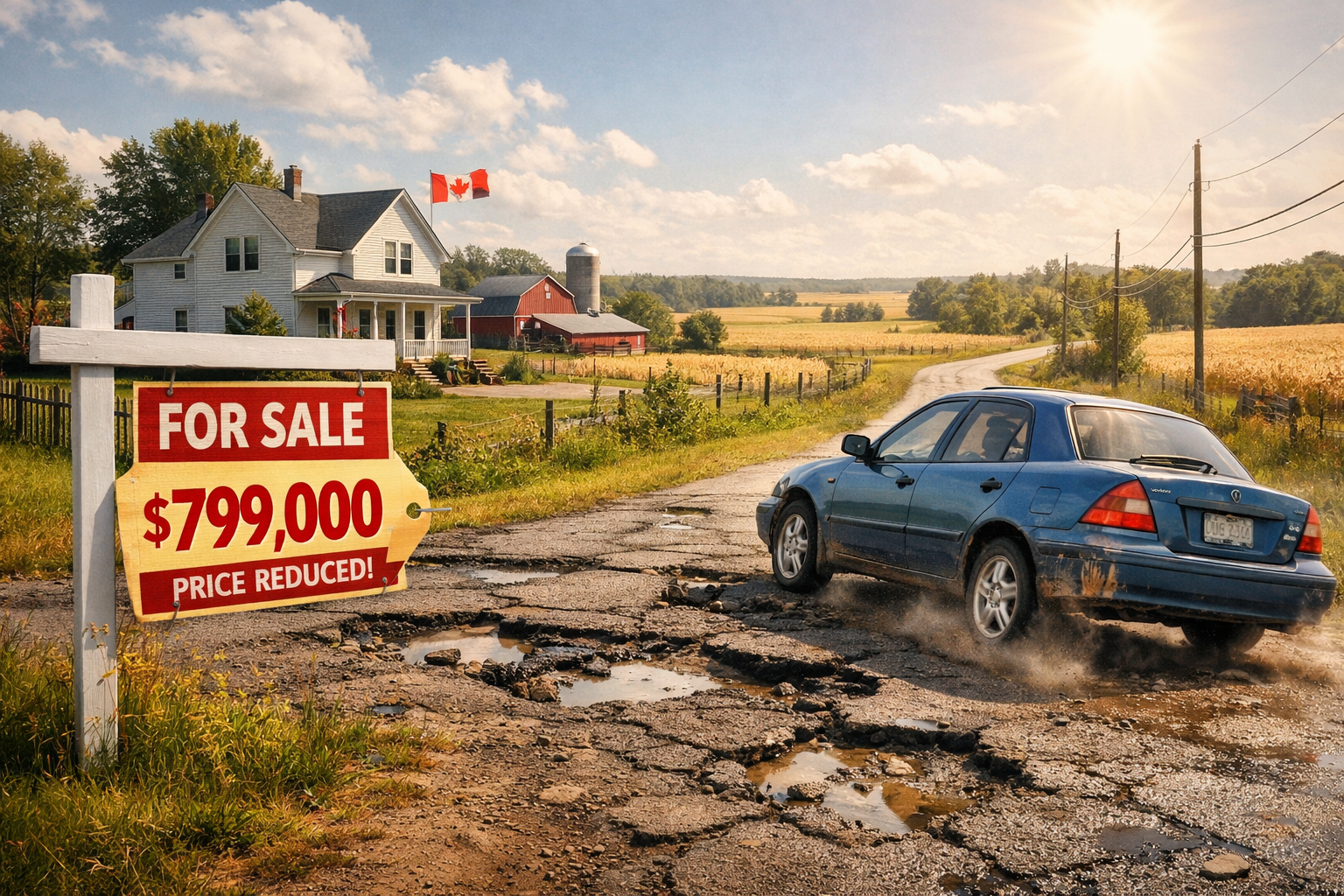
The Rural Reality: Why Living in Small-Town Ontario is Getting Harder in 2026
For a long time, the trade-off for living in rural Ontario was simple: you sacrificed the convenience of the city for a lower cost of living and a slower pace of life. But as we move through 2026, that equation has shifted. The “peace and quiet” now comes with a price tag and a set of logistical hurdles that are making the rural dream increasingly difficult to sustain.
From the shores of Lake Huron to the small farming hamlets across the province, the struggle is becoming a shared experience. Here is why the rural lifestyle is hitting a breaking point this year.
1. The Disappearance of the “Cheap” Home
The biggest draw to rural Ontario used to be affordability. You could sell a modest townhouse in the suburbs and buy a sprawling property with a workshop in the country. Today, that gap has almost vanished.
Property values in small towns have surged, driven by a decade of urban flight and a chronic lack of new housing starts. If you’re a local trying to buy your first home in the town you grew up in, you’re now competing with remote workers and investors, often being priced out of your own backyard.
2. The Logistics of Healthcare
In 2026, healthcare in rural Ontario feels like a “postal code lottery.” While the province talks about modernization, the reality on the ground is often a “Closed” sign on the local Emergency Room door.
Staffing shortages have hit rural clinics the hardest. It’s not just about the drive to see a specialist anymore; it’s about whether your local clinic has a nurse practitioner available this week or if you’ll have to drive an hour to the nearest urban center just for a basic prescription refill. For the aging population that defines many of these communities, this lack of proximity is becoming a genuine safety concern.
3. Infrastructure: The Hidden Tax
When you live in the city, infrastructure is something you take for granted. In the country, you feel every pothole.
- The Maintenance Gap: Small municipalities are drowning in the costs of maintaining thousands of kilometers of roads and aging bridges with a tiny tax base. As these roads deteriorate, the wear and tear on personal vehicles—which are mandatory for survival—adds a “hidden tax” of thousands of dollars in annual repairs.
- The Internet Struggle: While high-speed fiber is slowly snaking its way through the province, many pockets remain in a digital dead zone. In 2026, having unreliable internet isn’t just an inconvenience; it’s a barrier to education, remote work, and staying connected to modern services.
4. The Rising Cost of Distance
In rural Ontario, “going to town” is an expensive mission. With no public transit to speak of, every errand requires a vehicle.
Between the price of fuel, the cost of insurance, and the sheer distance between a rural home and the nearest grocery store, the daily cost of living is often higher than in the city. When you factor in the rising cost of groceries—which are often more expensive in small-town independent stores than in urban discount chains—the financial pressure is relentless.
5. The Strain on Community Identity
Perhaps the hardest change to quantify is the social one. As long-time residents are priced out and local businesses struggle to find staff who can afford to live nearby, the “soul” of many small towns is being stretched thin.
The volunteer fire departments, the local legions, and the community halls are seeing fewer hands on deck. When the people who keep a town running can no longer afford to live there, the very sense of community that makes rural Ontario special begins to fade.
Is the Dream Still Alive?
People stay in rural Ontario because they love the land, the privacy, and the people. But in 2026, love isn’t enough to pay the property taxes or fix a broken axle on a washed-out sideroad.
The rural dream isn’t dead, but it is changing. It is becoming a lifestyle reserved for those who can afford the “distance premium,” leaving many multi-generational families wondering if they can afford to stay in the places they call home.
Leave a Reply