
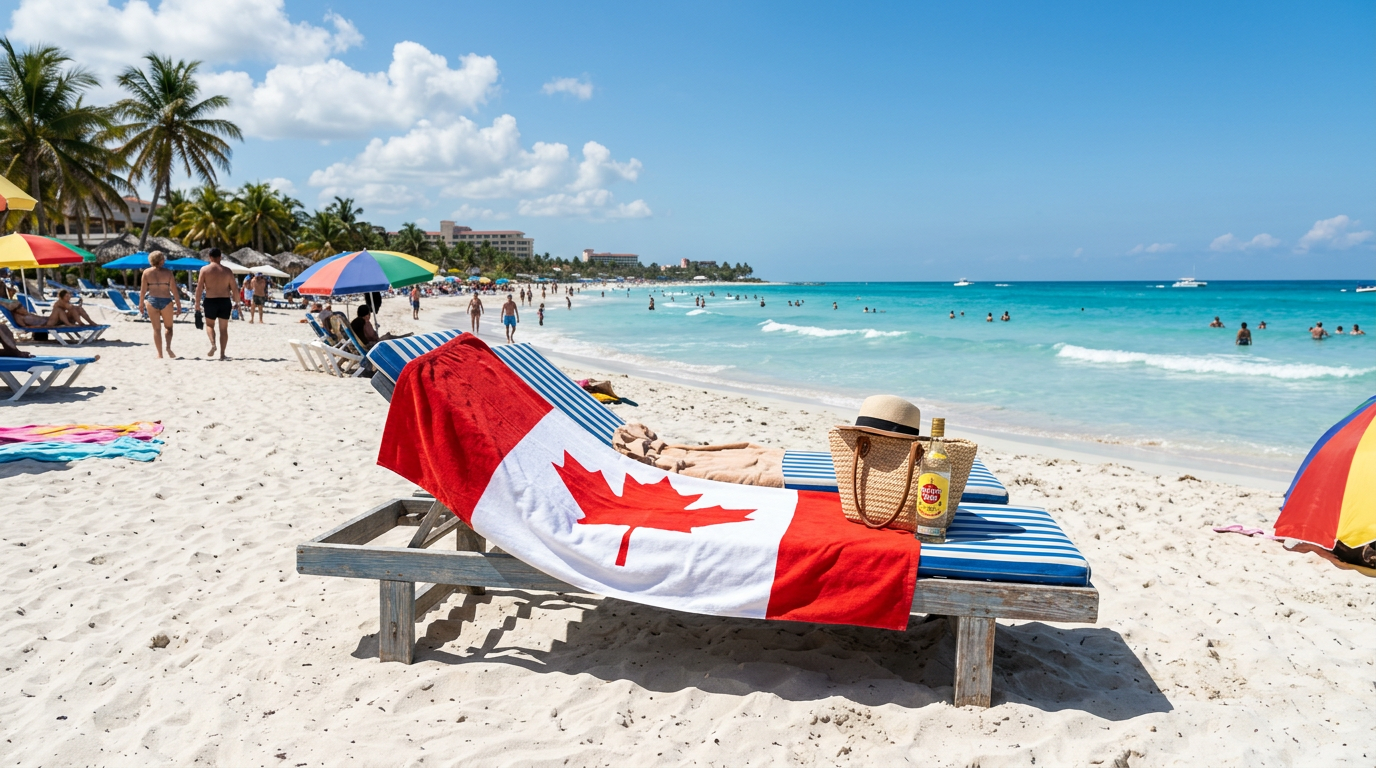
For Canadians, planning a winter getaway to Cuba is as routine as shovelling the driveway after a January blizzard. We pack our bags, board a direct flight, and four hours later, we’re sipping a Mojito on a sun-drenched beach in Varadero. It’s cheap, it’s cheerful, and it’s completely normal.
But for our American neighbours? It’s a completely different story.
The relationship between Cuba and the United States represents one of the longest-running political conflicts in modern history. While Canadians view the island nation through the lens of affordable all-inclusive resorts, U.S. policy is still rooted in revolution, Cold War politics, ideological standoffs, and deep-seated property disputes.
So, how did two North American countries end up with such vastly different relationships with an island just 150 kilometres off the coast of Florida? Let’s dive into the history, the politics, and why Canadians vacation where Americans face legal roadblocks.
The Roots of the Rift: Before 1959
To understand why the U.S. and Cuba are frozen in a political winter, we have to look back to the era before 1959. For decades, Cuba was heavily influenced—both economically and politically—by the United States. American corporations owned the lion’s share of Cuban utilities, railways, hotels, and sugar plantations.
While American tourists enjoyed Havana as a glamorous playground, many Cubans felt their country was effectively controlled by outside interests and the U.S.-backed dictatorship of Fulgencio Batista.
The Revolution and the Cold War Escalation
Everything changed in 1959 when Fidel Castro overthrew the Batista regime. Seeking economic independence, Castro’s government nationalized industries and seized property owned by wealthy Cubans and American corporations—without offering compensation that the U.S. deemed acceptable. This massive property dispute triggered immediate, severe tensions.
As the Cold War escalated, Castro aligned Cuba with the Soviet Union, America’s primary geopolitical rival. The relationship devolved into deep hostility following two major historical flashpoints:
- The Bay of Pigs Invasion (1961): A failed, U.S.-backed attempt by Cuban exiles to overthrow Castro’s government.
- The Cuban Missile Crisis (1962): The Soviet Union deployed nuclear missiles to Cuba, bringing the world to the brink of nuclear war.
Following these events, the U.S. imposed a comprehensive economic embargo designed to isolate Cuba and cripple its economy.
Why the U.S. Embargo Still Stands
Decades after the Cold War ended and the Soviet Union collapsed, the American embargo remains firmly in place. This persistence is driven by several complex factors:
- Political Ideology: Cuba remains a one-party communist state, raising ongoing concerns in Washington regarding human rights and political freedoms.
- Unresolved Claims: Billions of dollars in confiscated American property claims remain unsettled.
- U.S. Domestic Politics: The influential Cuban exile community, particularly in Florida, strongly supports keeping pressure on the Cuban government. Because Florida has historically been a critical swing state in U.S. elections, domestic politicians are highly sensitive to this voting bloc.
We’ve seen U.S. policy fluctuate wildly depending on who is in the White House. President Barack Obama famously restored diplomatic ties and loosened travel restrictions, but President Donald Trump later reversed many of those changes, tightening sanctions once again.
The Canadian Contrast: Why We Vacation Normally
While Washington chose isolation, Ottawa chose engagement. Canada never adopted the American embargo policies. Instead, Canada maintained uninterrupted diplomatic relations and trade with Cuba through the decades.
Because of this open-door policy, Cuba naturally evolved into one of the most popular winter destinations for Canadians looking to escape the freeze. When Canadians think of Cuba, we don’t think of geopolitical stalemates; we think of:
- Inexpensive, all-inclusive vacation packages
- Pristine white-sand beaches
- Warm, reliable winter weather
- Friendly, welcoming people
Every year, hundreds of thousands of Canadians travel seamlessly to popular resort areas like Varadero, Havana, and Holguín.
Why Can’t They Just Get Along?
It’s a question that many ordinary Americans and Canadians ask. Geographically, Cuba and the U.S. are incredibly close—separated by just 150 km of ocean. Yet politically, they’ve behaved like enemies for more than 60 years.
The reality is that governments operate based on ideology, national security concerns, historical grievances, and internal political pressures—not necessarily the desires of everyday citizens. Polls consistently show that many Americans support normalizing relations, just as many Cubans desire freer trade and travel. However, unravelling six decades of mistrust and political symbolism takes a long time.
Until Washington and Havana can find common ground, Cuba will remain a complicated political puzzle for Americans—and a favourite tropical hotspot for Canadians looking to swap their snow boots for sandals.
Leave a Reply