
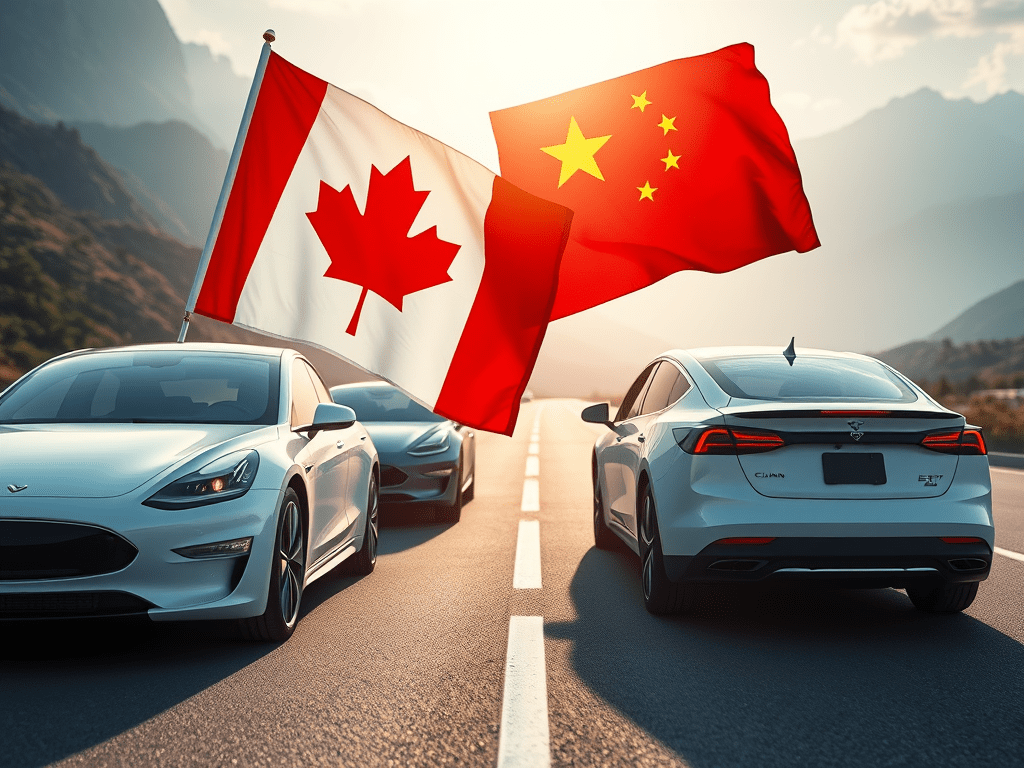
In early 2026, Canada’s trade policy regarding Chinese electric vehicles (EVs) shifted significantly. After a period of high tension in 2024 and 2025, where Canada imposed a 100% surtax on Chinese-made EVs, the federal government under Prime Minister Mark Carney negotiated a new agreement.
This deal allows a limited annual quota (starting at 49,000 units) of Chinese EVs into Canada at a much lower 6.1% tariff, in exchange for China lowering duties on Canadian agricultural products like canola.
Here are the primary pros and cons of this new market access:
The Pros (Benefits)
- Affordability for Consumers: Chinese EVs are generally 20% to 30% cheaper than North American or European equivalents. The new agreement requires that by 2030, 50% of these imports must be priced below $35,000 CAD, filling a massive gap for “budget” EVs in Canada.
- Climate Target Support: To reach Canada’s goal of 100% zero-emission vehicle sales by 2035, the country needs a high volume of accessible cars. Lower prices are expected to re-accelerate adoption rates, which had slowed due to high interest rates and the high cost of existing EVs.
- Agricultural Trade Relief: The “EV-for-Canola” trade-off provides immediate relief to Canadian farmers. China agreed to lower its retaliatory duties on Canadian canola and other agri-food products, stabilizing a multi-billion dollar export sector.
- Technological Competition: Chinese brands like BYD and Xiaomi are leaders in battery technology (such as LFP “Blade” batteries) and software integration. Their presence is expected to force established automakers (Ford, GM, Tesla) to lower prices and innovate faster to stay competitive.
The Cons (Drawbacks)
- Threat to Domestic Manufacturing: Canada and Ontario have invested billions of taxpayer dollars into building a domestic EV supply chain (e.g., Volkswagen and Stellantis battery plants). Critics argue that allowing subsidized Chinese imports could “hollow out” this industry before it fully matures.
- Geopolitical Friction with the U.S.: The United States maintains a strict 100% tariff on Chinese EVs. Canada’s decision to lower its tariff creates a “divergence” in North American trade policy. U.S. officials have expressed concerns that Canada could become a “backdoor” for Chinese goods into the American market, potentially complicating future USMCA negotiations.
- Labor and Environmental Concerns: Many Chinese manufacturers benefit from lower labor costs and less stringent environmental regulations during production. Canadian unions, such as Unifor, argue this creates “unfair competition” against Canadian workers who earn higher wages under stricter standards.
- Security and Data Privacy: As EVs become “computers on wheels,” there are ongoing concerns regarding the data collected by Chinese-made vehicle software and where that information is stored, though this remains a point of regulatory debate.
Summary of the 2026 Agreement
| Feature | Detail |
| Import Quota | Initially 49,000 vehicles/year (growing to ~70,000) |
| New Tariff Rate | 6.1% (down from 100%) |
| Price Target | 50% must be under $35,000 CAD by 2030 |
| Investment | China is expected to begin investing in Canadian auto facilities within 3 years |
 Canadian Country Life