
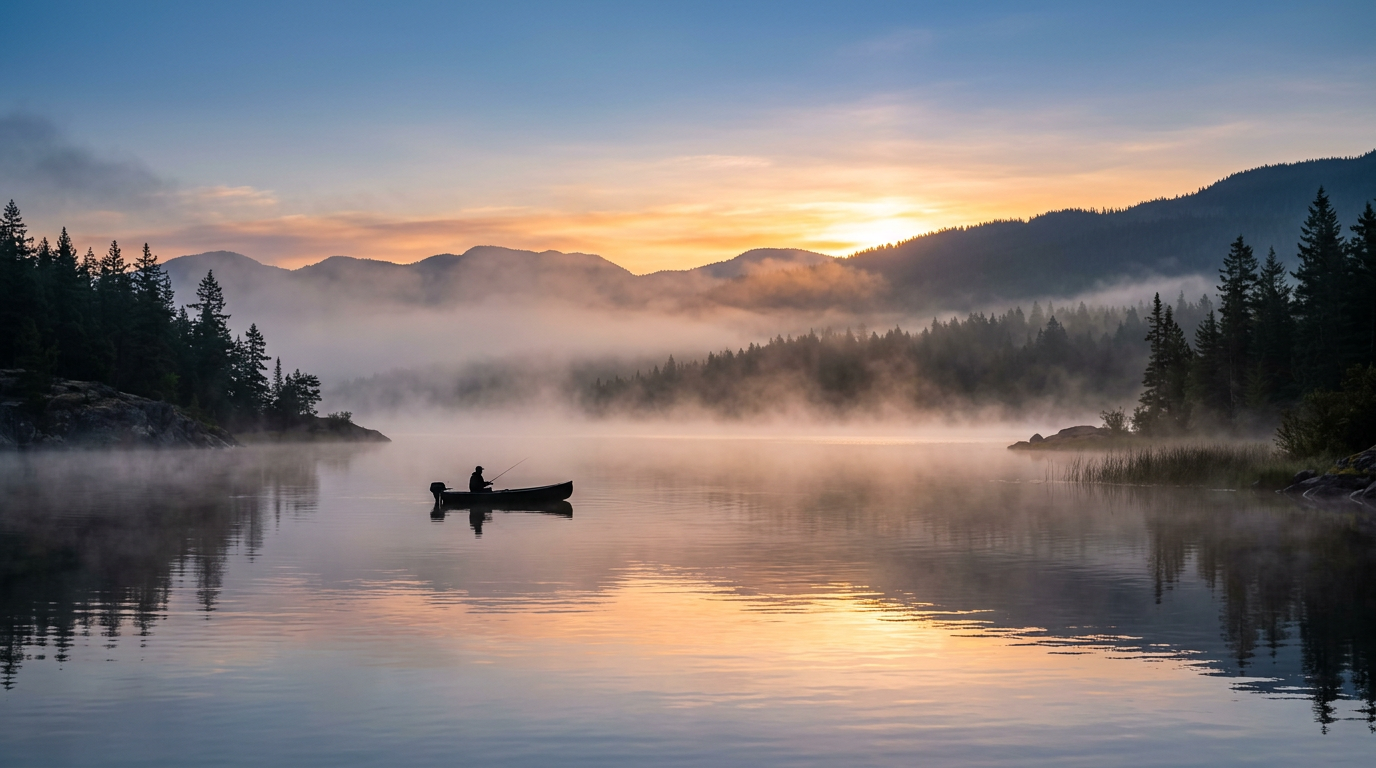
Your ultimate guide to Canadian fishing regulations, bait management zones, non-toxic gear requirements, and species-specific angling styles from coast to coast.
From the sweeping saltwater coastlines of British Columbia to the crystal-black depths of the Canadian Shield, Canada boasts over two million lakes and rivers containing roughly 20 percent of the world’s fresh water. For rural landowners, cottagers, and backcountry adventurers alike, wetting a line is a fundamental part of Canadian country living. But just like our hunting laws, stepping onto a dock or launching a boat without understanding the rules, seasons, and technical requirements can turn a peaceful afternoon into an expensive run-in with conservation officers.
In Canada, fishing frameworks are managed provincially to support conservation, alongside federal oversight for marine environments and migratory species. Licensing requirements, conservation limits, slot sizes, and sanctuary closures vary heavily by designated fisheries management zones. Pulling a fish out of sanctuary waters or keeping a hen out of season can result in hefty fines and the seizure of your rod, reel, or boat.
Essential Legal Mandate: Before casting out, every angler must possess a valid provincial Outdoors Card (or regional equivalent) paired with the appropriate sport or conservation fishing licence. Always cross-reference your specific regional guide for zone boundaries, sanctuaries, and fish size slot limits.
1. Coldwater Apex Species (Lake Trout & Rainbow/Steelhead Trout)
Trout fishing is a cornerstone of Canadian angling culture, demanding specialized watercraft or presentation methods to target deep lake structures and fast-flowing gravel rivers.
Where to Catch & Seasons
Lake Trout thrive in deep, cold, oligotrophic lakes across the Canadian Shield, Western Canada, and the Great Lakes. Rainbow and migratory Steelhead trout are widely distributed throughout deep inland rivers, high-altitude mountain streams, and the coastal tributaries of the Pacific and Atlantic watersheds. In most jurisdictions, lake trout seasons peak from late spring to early autumn, with highly regulated winter ice-fishing windows. River trout seasons often focus heavily on spring and autumn spawning runs.
Styles, Baits, and Presentations
- Deep Trolling: Utilizing downriggers or lead-core lines to drop heavy spoons (like the Williams Wabler) or deep-diving minnow plugs down 40 to 120 feet.
- What Bites: Deep-dwelling summer Lake Trout.
- Float Fishing (Centerpin or Spinning): Drifting artificial roe sacs, live nightcrawlers, or soft plastic beads under a highly sensitive slip float down rapid river currents.
- What Bites: River-running Rainbow Trout and Steelhead.
- Fly Fishing: Presenting sinking streamers, heavy nymphs, or delicate dry flies using specialized weighted fly lines.
- What Bites: Stream-dwelling Rainbows, Brook Trout, and Cutthroat Trout.
2. Coolwater Predators (Walleye & Yellow Perch)
Often considered the finest eating fish in North America, Walleye (frequently called pickerel in rural areas) and their close cousins, Yellow Perch, are primary targets for Canadian anglers.
Where to Catch & Seasons
Walleye and Perch are prolific across central and eastern Canada, populating large river systems, stained boreal waters, and expansive lake beds like Lake Erie, Lake Huron, and Lake Nipissing. The highly anticipated Walleye opener typically starts in mid-to-late May across central Canada once spring spawning completes, running through to early spring. Perch often feature generous open seasons year-round.
Styles, Baits, and Presentations
- Jigging: Bouncing a 1/8 to 3/8 oz round ball lead jig-head tipped with a live minnow, nightcrawler, or a soft-plastic paddle tail directly along deep weed edges, rocky drop-offs, and transitions.
- What Bites: Walleye, Yellow Perch, and Smallmouth Bass.
- Live Bait Rigging (Lindy Rigs / Bottom Bouncers): Slowly dragging a walking sinker or heavy wire bottom bouncer paired with a long monofilament leader and a spinning worm harness through flats.
- What Bites: Cruising schools of Walleye.
- Slip-Bobbering: Suspending a lively emerald shiner or fathead minnow a foot off a muddy or rocky bottom using a slip float.
- What Bites: Evening Walleye and schooling Yellow Perch.
3. Shallow Water Fighters (Largemouth & Smallmouth Bass)
Pound-for-pound, few fish match the aerial acrobatics of a Canadian Smallmouth or the aggressive, explosive strikes of a weed-dwelling Largemouth Bass.
Where to Catch & Seasons
Smallmouth Bass dominate rocky shorelines, clear glacial lakes, and river currents throughout Ontario, Quebec, and the Maritime provinces. Largemouth Bass are found in shallow, muddy, weed-heavy bays, lily pad fields, and stump-filled cottage country reservoirs. To protect nesting males guarding eggs, bass seasons stay strictly closed throughout the spring, opening in mid-to-late June and running through late autumn.
Styles, Baits, and Presentations
- Topwater Fishing: Chugging hollow-body frogs, prop baits, or “walk-the-dog” stickbaits directly across lily pads and heavy mats.
- What Bites: Aggressive Largemouth Bass and Northern Pike.
- Finesse Soft Plastics (Drop Shot / Ned Rig): Suspending a small, buoyant straight-tail worm above a bottom weight or working a miniature plastic stickbait along deep boulder flats.
- What Bites: Deep or highly pressured Smallmouth Bass.
- Power Fishing: Retrieving spinnerbaits, chatterbaits, or square-bill crankbaits through submerged vegetation and timber structures.
- What Bites: Multi-species action from both Largemouth and Smallmouth Bass.
4. The Giants (Northern Pike & Muskellunge)
Known as the water wolves of the north, Pike and Muskellunge (Muskie) are the ultimate toothy apex predators patrolling Canadian freshwaters.
Where to Catch & Seasons
Northern Pike are found in almost every weed bay and river system across Canada. Muskellunge are rarer, localized to specific legendary systems like the St. Lawrence River, the Kawartha Lakes, Georgian Bay, and Lake of the Woods. Pike opens in mid-May, while Muskie features a late-spring or early-summer opening date to fully safeguard late spawners.
Styles, Baits, and Presentations
- Heavy Casting: Throwing oversized inline spinners (like Mepps Musky Killers), massive bucktails, or 8-to-12-inch rubber swimbaits on heavy baitcasting tackle.
- What Bites: Monster Muskellunge and trophy Northern Pike.
- Spoon Fishing: Casting classic, high-vibration metal spoons like the red-and-white Eppinger Daredevle around shallow bay structures and weed drops.
- What Bites: Active Northern Pike.
Toothy Predator Rule: Heavy wire, fluorocarbon shock leaders (80–130lb), and long needle-nose pliers are mandatory safety gear when targeting Pike or Muskie to protect both the angler and the fish during hook removal.
The Master Canadian Fishing Matrix
To make planning your next trip into the backcountry straightforward, here is a complete breakdown summarized into an easy-to-read reference chart. Keep this bookmarked for your next visit to your local outfitter!
| Species Group | Where to Target | Fishing Style | Best Baits & Lures | Regulatory & Gear Notes |
| Lake Trout | Deep Shield lakes, Great Lakes | Deep Trolling, Vertical Jigging | Williams Wabler spoons, heavy white tube jigs | Closed fall seasons. Barbless hooks required in many western waters. |
| Rainbow / Steelhead | Flowing rivers, coastal streams | Float Fishing, Fly Fishing | Roe sacs, plastic beads, woolly bugger flies | Strict spring sanctuary boundaries apply on spawning rivers. |
| Walleye | Stained lakes, large rivers, drop-offs | Jigging, Bottom Bouncing | Live minnows, leeches, nightcrawlers, paddle tails | Strict harvest slot limits (e.g., must release fish between 46-56cm). |
| Yellow Perch | Shallow bays, weedy basins | Slip-bobbering, Micro-jigging | Small emerald shiners, live worms, micro tubes | Generous catch limits, but strict transport possession limits apply. |
| Bass (Large/Small) | Rocks, reefs (Smallie); Pads, wood (Large) | Topwater, Finesse Drop Shot | Senko worms, hollow frogs, tubes, spinnerbaits | Strict late-spring catch-and-release closures during nesting. |
| Pike & Muskie | Weed beds, timber, rocky points | Heavy Casting, Jerkbaiting | Inline bucktails, large metal spoons, heavy plastics | Steel/Fluorocarbon leaders mandatory. Single-barb hooks common. |

5. Critical Fishing Regulations: Lead Bans, Live Bait, and Catch-and-Release
Before launching your boat into rural Canadian waters, you must be fully aware of three critical conservation laws that carry severe fines if violated:
The Lead Sinker Restrictions
Under the Canada Wildlife Act and federal park regulations, it is strictly illegal to use lead sinkers or lead jigs weighing less than 50 grams (roughly 1.76 ounces) in any National Park or National Wildlife Area. This law protects loons, swans, and other waterfowl from lethal lead poisoning caused by ingesting lost tackle. Many regional management zones across Canada are extending these bans, making non-toxic alternatives like tungsten, steel, and bismuth the industry standard.
Invasive Species & Live Bait Transport Laws
To stop the devastating spread of invasive species and diseases like Viral Hemorrhagic Septicemia (VHS), Canadian provinces enforce incredibly strict laws regarding baitfish. In Ontario, for example, anglers are restricted to specific Bait Management Zones (BMZs). It is illegal to move live or dead minnows, leeches, or baitfish overland across BMZ borders. If you buy live bait, you must possess a valid, dated commercial bait receipt, and you must use or dispose of that bait safely in the trash within two weeks. Never dump unused live bait or bait bucket water into a water body!
Hook Restrictions and Handling
In many pristine river setups, coldwater trout sanctuaries, and across vast regions of Western Canada, regulations require the exclusive use of single, barbless hooks. When practicing catch-and-release, anglers should handle fish with wet hands or a rubberized landing net, minimize exposure to the air, and never pull a fish onto a hot aluminum boat floor before release.
The Takeaway
Protecting our fisheries is an ongoing commitment to the land and water. By selecting the correct tackle, honoring regional size slot limits, choosing eco-friendly weights, and respecting bait boundaries, we ensure that Canada’s world-class waters stay healthy and productive for generations to come.
See you out on the water!
Leave a Reply