
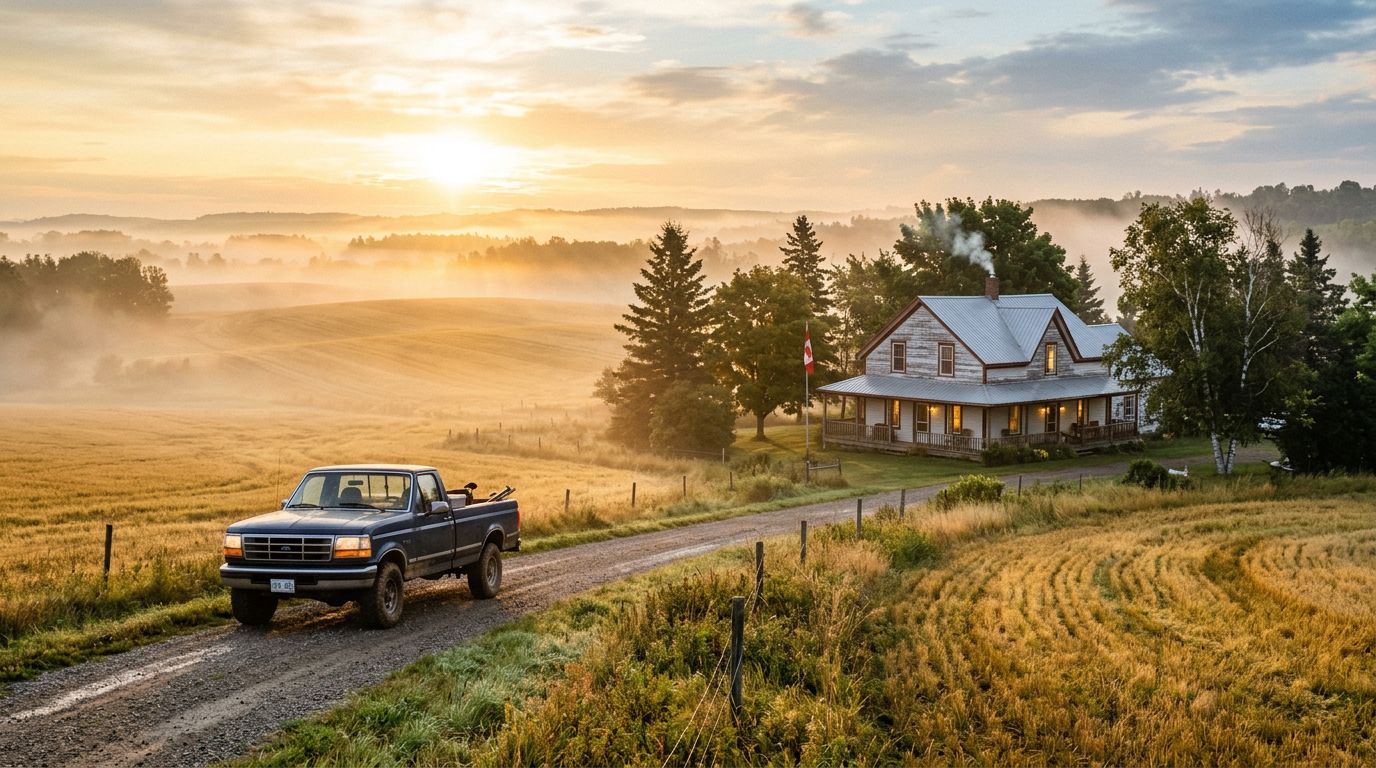
The True Cost of Rural Living in Canada: Can We Reclaim the Canadian Dream?
The “Canadian Dream” has long been defined by a specific kind of freedom: owning a piece of land, raising a family in a safe community, and enjoying the vast, rugged beauty of the North. It was the promise that hard work—whether in a shop, a field, or an office—would eventually lead to a quiet life on a few acres with a sunset view.
However, that dream is increasingly under siege. As urban centers like Toronto and Vancouver become prohibitively expensive, the “urban sprawl” is pushing further into the countryside. What used to be quiet farmland is being swallowed by subdivisions, driving up property taxes and land value. For many, the dream isn’t just disappearing; it’s being priced out of existence.
If you are looking to escape the concrete jungle, here is a highly detailed breakdown of what it actually costs to live rural in Canada in 2026.
1. Real Estate and Land: The Initial Investment
While rural homes are generally cheaper than a condo in downtown Ottawa or Calgary, the gap is closing. According to the Canadian Real Estate Association (CREA), rural prices in Ontario and British Columbia have seen significant spikes due to remote work trends.
- Buying Land: If you plan to build, raw land can range from $50,000 in Northern Ontario or the Prairies to $500,000+ in Southern Ontario’s “commuter belt.”
- Existing Homes: A modest farmhouse or rural bungalow typically ranges between $400,000 and $750,000 depending on the proximity to a major city.
- Property Taxes: While often lower than city rates, rural taxes vary wildly. If your “rural” town is being absorbed by a growing city, expect your assessment to climb annually.
2. Infrastructure: The “Invisible” Costs
Living in the city means you take services for granted. In the country, you are your own utility company.
- Septic and Well Maintenance: Most rural homes rely on a septic system and a private well. A septic tank needs pumping every 3–5 years (approx. $300–$500), and well pumps can cost $2,000+ to replace if they fail.
- Heating: Many rural homes lack natural gas lines. You may rely on propane, oil, or wood. Propane heating for a standard winter can cost $2,500–$4,000 annually, depending on current energy prices.
- High-Speed Internet: This is the lifeline of the modern rural resident. Satellite services like Starlink cost roughly $140/month plus equipment fees, as fiber optics rarely reach deep-country concessions.
3. Transportation: The Rural Tax
In the city, you might get by with a bike or a transit pass. In rural Canada, a reliable vehicle is a non-negotiable requirement.
- Fuel and Maintenance: You will drive further for everything—groceries, doctor appointments, and hardware stores. Expect to spend $300–$500 per month on fuel alone.
- The “Truck Factor”: Winter in rural Canada requires 4WD or AWD and high-quality winter tires. If you are maintaining land, you’ll likely need a pickup truck or a tractor, adding significant insurance and maintenance overhead.
4. The Disappearing Dream: Why is it Happening?
The Canadian Dream is fading due to a “perfect storm” of economic factors:
- Urban Encroachment: Cities are expanding into rural areas (a process called “exurbanization”), turning quiet rural zones into busy transit corridors and driving up the cost of living for locals.
- Inflation and Housing Supply: The cost of building materials and the lack of available skilled labor in rural areas make new builds or major renovations incredibly expensive.
- Zoning and Regulations: Strict conservation authority rules and municipal by-laws often prevent families from building on their own inherited land, stifling the ability to create multi-generational homes.
5. Reclaiming the Dream: What Can Be Done?
To get the Canadian Dream back, we need a shift in both policy and mindset:
- Incentivizing Rural Trades: We need more licensed technicians and tradespeople living in rural communities to lower the cost of maintenance and construction.
- Zoning Reform: Municipalities need to find a balance between conservation and the right of landowners to build sustainable, primary residences.
- Investing in Heritage: Supporting small-scale Canadian agriculture and heritage tourism keeps rural economies diverse and resilient against urban sprawl.
Estimated Monthly Budget for Rural Living (Ontario/General Canada)
| Expense Category | Estimated Monthly Cost (CAD) |
| Mortgage (avg $500k home) | $2,800 – $3,200 |
| Utilities (Hydro, Propane, Wood) | $400 – $600 |
| Vehicle (Gas, Insurance, Maintenance) | $600 – $900 |
| Connectivity (Internet/Mobile) | $200 – $300 |
| Groceries (Prices often higher rural) | $600 – $900 |
| Total | $4,600 – $5,900 |
Final Thoughts
Living rural in Canada is no longer the “cheap” alternative to city life; it is a lifestyle choice that requires a specific set of skills and a healthy financial buffer. However, the reward—waking up to the sound of wind in the pines rather than sirens on the street—is, for many of us, completely priceless.
To keep this dream alive, we must protect our rural heritage and ensure that the next generation of Canadians can still afford to call the countryside home.
Suggested Internal Links:
- Best Rural Canadian Side Hustles in 2026
- How Canadians Are Surviving Inflation
- What $100 Buys in Canada in 2026
- Climate Change and Canada’s Future Advantage
Leave a Reply